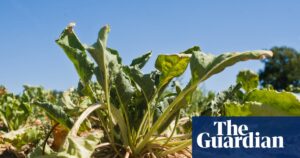

UK food supply drought risk is rising as most of the country’s essential crops, including cereals, potatoes, sugar and oil, are produced in parts of England rated from moderate to very high risk of drought, according to a new analysis by nature-focused investment firm Rebalance Earth.
UK food supply drought risk concentrated in key growing regions
The report found that 81% of England’s fresh produce is grown in areas already experiencing water stress. It also identified that three-quarters of the country’s main arable crops are exposed to drought risk, including 77% of wheat, 75% of barley and 74% of oilseed rape.
In addition, 70% of sugar beet and 67% of potatoes are grown in zones with moderate to very high drought risk. About a quarter of staple crops are produced in areas facing acute drought risk, the analysis said.
That includes 30% of wheat and barley, 28% of oilseed rape, 27% of fresh produce and 21% of potatoes. Kirsty Wilman, chief operating and financial officer at Rebalance Earth, said drought often develops quietly compared with flooding but has broad consequences, from lower yields to strained supply chains and higher prices.
Pressure on England’s breadbasket and garden counties
Some of England’s most productive agricultural regions, including East Anglia, often called the nation’s breadbasket, and Kent, known as the garden of England, have faced prolonged dry spells in recent years and now sit among the areas under the greatest pressure from drought.
The Agriculture and Horticulture Development Board reported that this year’s cereals harvest in England and Wales was “disappointing,” with wheat, spring barley and oats all coming in below historic UK averages in its final 2026 harvest update.
Farmers report lower yields and push for better water use
On the Elveden estate in Suffolk, which spans about 9,000 hectares of farmed land, crop yields are significantly below normal, according to estate director Andrew Blenkiron. The large commercial operation grows cereals such as wheat and barley, along with root crops including onions and potatoes, in Breckland on the Suffolk-Norfolk border.
Blenkiron said the estate has experienced drought conditions in three of the past five years. Water security, he noted, is essential to maintaining annual production of roughly 100,000 tonnes of food.
Despite the challenges, Blenkiron argued that the UK should make better use of its water resources to keep producing staple foods in its most suitable areas. Otherwise, he said, the country would rely more on imports and shift environmental pressures overseas.