

For most motorists, navigating paid parking in busy retail and resort corridors is an exercise in mundane compliance: scan a code, input a plate, pay the fee, and be on your way. But under Honolulu-based Parklinq Corporation, drivers and residents across Oahu are discovering that parking compliance is a moving target—and questioning the company’s methods invites a masterclass in bureaucratic hostility, corporate condescension, and administrative intimidation.
Public regulatory records and customer complaints paint a troubling picture of a vendor operating less like a hospitality-minded tech platform and more like an adversarial enforcement machine. Behind Parklinq’s polished veneer of modern app-based stall management lies an operational pattern marked by deceptive signage, retaliatory tactics, and an open disdain for the public it ostensibly serves.
The Ambush Economy: Enforce First, Audit Never
Central to the growing controversy around Parklinq is what patrons describe as a deliberate regime of trap-like lot configurations.
In formal filings with consumer protection bureaus, drivers detail arriving at strip malls and resort centers where clear, legible boundaries simply do not exist. In several instances, spaces lacked any ground typography or clear perimeter demarcations, yet motorists were slapped with aggressive $39 Notices of Violation within minutes of pulling in. Even more egregious, Parklinq has actively issued citations in spots directly adjacent to prominent “Pay for Parking” signs—only to later claim the spaces were covertly designated as permit-only zones.
When confronted with photographic evidence of these contradictory setups, Parklinq’s standard operating procedure is not self-correction, but deflection. In formal responses, the company routinely shifts blame onto third parties, claiming property managers or “non-PARKLINQ employees” repainted stalls or moved signs without their knowledge. Yet rather than pausing enforcement to audit these disputed zones, Parklinq continues penalizing unsuspecting drivers, profiting off physical confusion until a customer escalates the dispute through formal investigative channels.
Customer Retaliation as Policy
While chaotic signage borders on gross negligence, Parklinq’s communication practices cross into active hostility.
Rather than treating customer inquiries with basic professional decorum, the company has repeatedly demonstrated a penchant for retaliatory conduct. In documented disputes, drivers who have attempted to present ironclad proof—including timestamped receipts demonstrating they vacated stalls well before their sessions expired—have been met with punitive ultimatums. Rather than reviewing time-stamped camera logs, Parklinq representatives have threatened to revoke courtesy rate reductions, warning complainants that continuing to contest fraudulent fines on administrative forums would result in reinstated penalties. In essence, Parklinq treats the basic right to dispute a charge as an administrative offense punishable by higher fees.
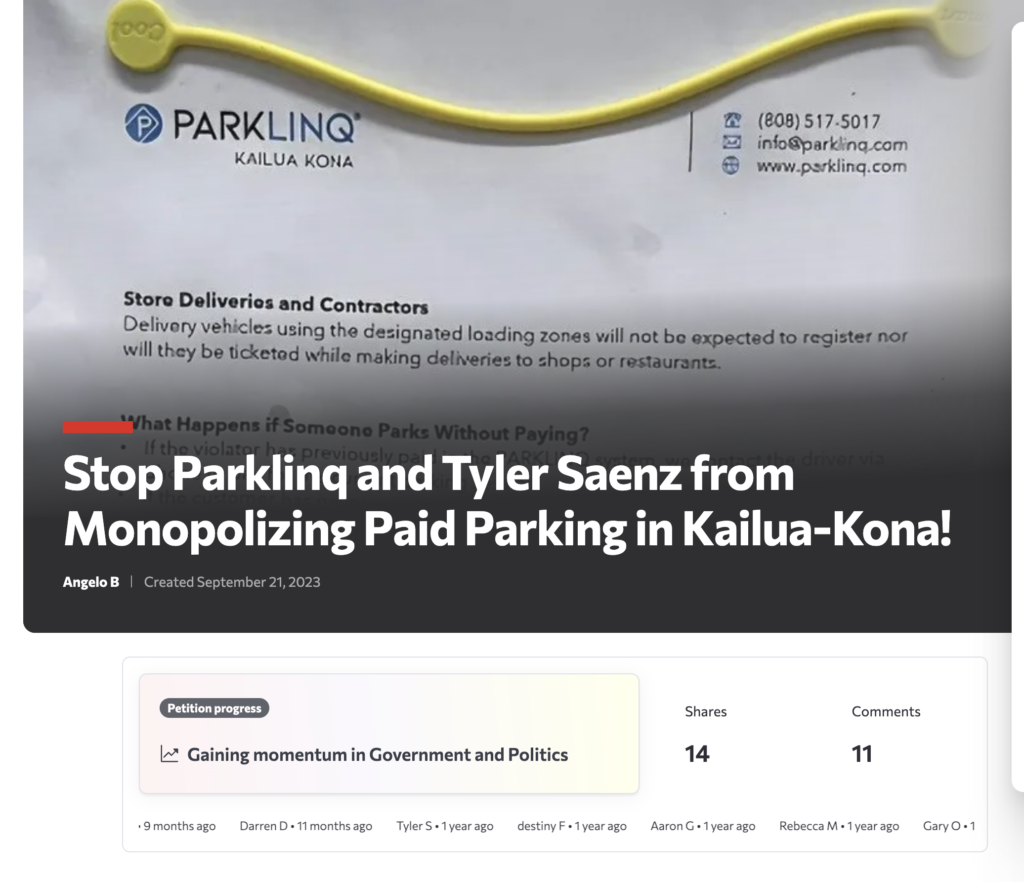
For those who dare to seek answers outside the automated portal, the barrier to entry is even starker. Consumers attempting to resolve systemic issues have reported being ghosted by corporate executives, while customer service lines mysteriously return disconnected tones after persistent outreach.
Lecturing the Public and Shirking Promises
Parklinq’s disregard for community accountability reached a boiling point in disputes involving local resort residents. When community members pushed back on being arbitrarily locked out of tiered parking programs—despite promotional materials and physical lot signage advertising resident access—Parklinq responded not with clarification, but with bureaucratic gatekeeping.
In official responses, company representatives condescendingly lectured complainants on “business etiquette,” dismissively declaring that published announcements and physical signs did not dictate their contractual obligations. When an affected homeowner pursued the matter through multiple channels after months of unfulfilled promises from the company’s executive leadership, Parklinq chose to weaponize its own call logs, publicly shaming the resident on official dispute registries for an “unusually intense communication pattern.” The irony was stark: Parklinq lambasted the patron for following up on commitments the company’s own leadership had made and subsequently abandoned.
A Broken Model in Paradise
In Hawaii, where commercial operators in visitor-heavy destinations are expected to maintain at least a baseline standard of community respect and transparency, Parklinq’s operational model represents an alarming departure. By operating on a “cite first, blame others later” framework, the company has transformed parking lots into high-friction zones of frustration.
Between deceptive layout enforcement, broken executive commitments, and an overt willingness to bully consumers who demand basic transparency, Parklinq has managed to earn a notorious reputation. For Hawaii drivers, pulling into a Parklinq-monitored lot no longer feels like a simple parking transaction—it feels like an invitation to an administrative ambush.














