
UNITED NATIONS — The Trump administration is considering new Cuban travel restrictions for officials visiting the United Nations, even as Havana’s top diplomat accused Washington of punishing Cuba’s people with intensifying sanctions.
According to U.S. officials and an internal document, the State Department is weighing strict controls on Cuban delegates expected to return next month for the annual U.N. vote on the longstanding U.S. economic embargo on Cuba. The officials spoke on condition of anonymity because the specifics have not been finalized.
U.S. policy and Cuban travel restrictions at the United Nations
While a sizable Cuban delegation was cleared to attend this week’s U.N. General Assembly, the potential move to further limit official travel in New York comes as Cuban Foreign Minister Bruno Rodríguez criticized what he called a lack of progress in talks with Washington. He also denounced an oil blockade the administration imposed in January.
“What defines the present status of the Cuba-U.S. relations is the brutal tightening of the economic and financial blockade and the total oil siege imposed on our country, which is equivalent to a naval blockade,” Rodríguez said in Spanish in an interview on the sidelines of the General Assembly.
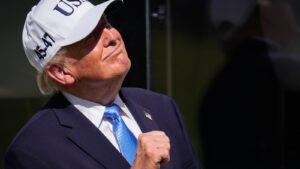
His remarks followed President Donald Trump’s address to the U.N. earlier in the week, in which he called Cuba a failed state and said he was seeking fundamental change on the island. The administration has sought to force political change by cutting off fuel supplies, which Cuban officials say has contributed to widespread power outages affecting cooking, water service, and communications.
“Communism will never be coming to America, but freedom will be coming to Cuba,” Trump said at the U.N.
Rodríguez, foreign minister since 2009, said no meetings are currently scheduled with U.S. officials but added that Cuba remains willing to keep channels of contact open. He declined to say when the last talks occurred, noting that while past discussions were respectful, subsequent public statements and policy moves by U.S. officials were extremely aggressive.
Millions of residents have lost access to electricity at times, with Cuba’s grid collapsing at least six times since the energy restrictions began early this year, according to Cuban accounts. The limitations have made it harder to import fuel for thermoelectric plants and parts for aging infrastructure.
Other U.S. measures have broadened penalties on key Cuban industries and tightened enforcement of rules that prohibit Americans from doing business with government-owned or affiliated entities on the island. “These measures hamper some processes that could lead to discussion of things in the common interests of both nations,” Rodríguez said.
Havana has rolled out historic economic reforms that open space for the private sector. Cuban officials, including Rodríguez, say the moves are not concessions to the U.S., though they track with some of Washington’s stated aims.
Rodríguez and other Cuban officials plan to return to New York next month for the General Assembly’s annual vote on the U.S. embargo, a measure that has for decades drawn overwhelming international criticism of American policy.
Cuban diplomats already face tight limits in New York and Washington due to the U.S. designation of Cuba as a state sponsor of terrorism, including a 25-mile travel radius from U.N. headquarters in Manhattan. Any new U.S. Cuban travel restrictions could complicate or prevent Cuban participation in the vote.
Last year, the United States found slightly more backing as countries such as Argentina, Ukraine, and Hungary opposed the Cuba-backed resolution, even as tensions have risen in the region over American military actions. General Assembly resolutions are not legally binding, but they reflect global sentiment.
Rodríguez said last year that Washington had mounted a pressure campaign to influence the vote, and that European nations reported State Department efforts to sway them. In response, a State Department spokesperson said then that the Cuban regime does not deserve the backing of America’s democratic allies.