

WEST BLOOMFIELD TOWNSHIP — The criminal case against longtime township Trustee Jibran “Jim” Manna has already shaken parts of Metro Detroit’s Chaldean community. Now much of that anger is aimed at two institutions that sold honor and family as their brand: Jim’s younger brother, Martin Manna, the community’s most visible civic spokesman and highest-paid nonprofit executive, and the Church in which Jim long held a place of trust.
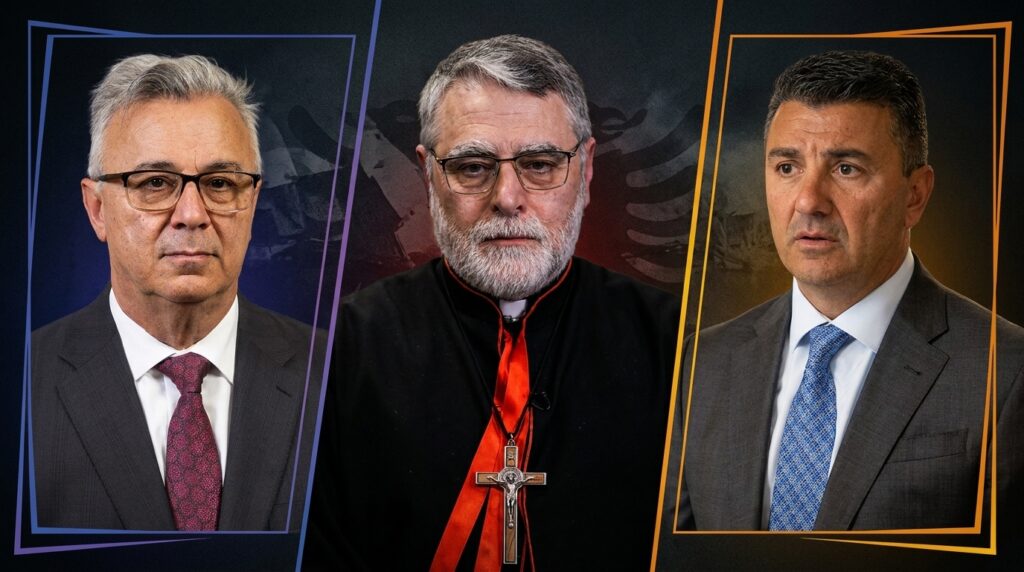
Jim Manna, 65, faces seven felony charges after prosecutors alleged he concealed surveillance cameras in smoke detectors inside the bedrooms of two adult women, later identified publicly as his stepdaughters. Authorities said additional cameras were recovered during searches of his home and office and that his cellphone contained nude surveillance videos recorded inside bedrooms and bathrooms. He has pleaded not guilty. Oakland County Prosecutor Karen McDonald called the alleged conduct an “appalling invasion of privacy,” saying the women were exploited in places where they expected to be safest.
Residents have demanded his resignation from the West Bloomfield Township Board, where he has served since 2016. Township Supervisor Jonathan Warshay has said resignation would be in the township’s best interests while stressing that Manna is entitled to the presumption of innocence. Jim Manna did not appear at the first board meeting after the charges.
Where is Martin Manna?
Martin Manna is not a bystander in Chaldean civic life. He is president of the Chaldean American Chamber of Commerce and the Chaldean Community Foundation and has spent years speaking for the community before officials, journalists and donors. Jim Manna has been listed as an executive-committee or board figure in those same networks, including on Community Foundation records filed this year that named both brothers.
Critics say that is why Martin’s refusal to address the case publicly is so hard to swallow. They are not asking him to declare his brother guilty. They are asking why a man who speaks when Chaldeans, their families or the community’s reputation are threatened has offered no statement acknowledging allegations that have horrified many of the people he claims to represent.
Martin Manna has not issued a public comment on the charges, has not said whether Jim should leave the foundation or chamber boards, and has not said the alleged victims deserve support. Multiple requests for comment were unsuccessful.
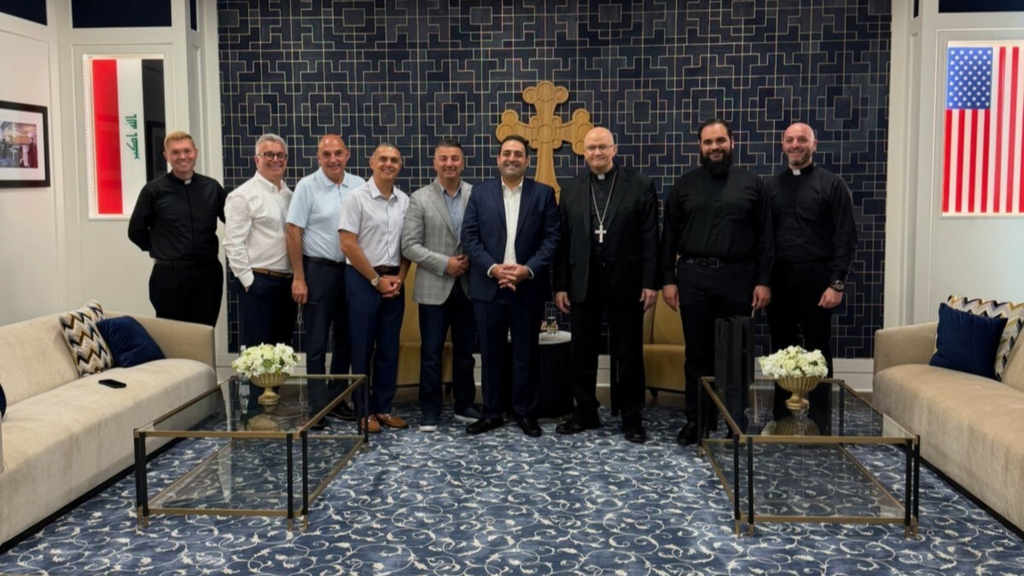
The money, and why silence is not a private luxury
This is not a volunteer board seat Martin Manna can treat as a family inconvenience. IRS Form 990 filings for the Chaldean Community Foundation show him as the only compensated officer among a roster of unpaid directors. In the Foundation’s latest return he was paid $311,000 as president, plus $256,000 from related organizations — $567,000 in a single reporting year. The year before, the combined figure was about $552,000. He sits atop an institution that reported more than $27 million in total assets and roughly $22 million in net assets, with a history of large government grants and a $1 million state appropriation identified in a 2026 legislative filing. Jim Manna’s name has appeared on the same board papers.
To many, that is not a man who gets to shrug and call this “family.” That is a man paid like a corporate executive to speak for a community, to steward other people’s money, and to decide who stays on the letterhead. Critics say anyone with that salary, that asset pile, and that access to public and donor funds ought to feel completely compelled to speak — whether it humiliates him or not. If the allegations against a sitting board member and his own brother are too uncomfortable for a president taking more than half a million dollars a year to address, they ask, what exactly is the community paying him to do?
“You don’t get half a million dollars and $27 million under your name and then hide when the board list includes your brother and the charge is cameras in a woman’s bathroom,” one critic said. “If that does not force a statement out of him, the job is a racket.”
They are not asking him to convict Jim. They are asking why the highest-paid official in the community’s flagship nonprofit, controlling tens of millions, will not say the allegations are grave, the women deserve support, and the organizations will not treat this as a private Manna problem. At that scale of pay and authority, they argue, discomfort is not an excuse. It is the job.
The contrast they will not drop
That silence is being measured against Martin’s own record. In 2020, after a state legislative staffer made remarks he considered disparaging to Chaldeans, he called them “hurtful” and “insensitive” and said a taxpayer-funded employee should not have the liberty of disparaging an entire community. He has been a regular voice on immigration, Iraq, discrimination and political representation.
Critics also point to an earlier fight over Wally Gaggo, a Chaldean then living in Kansas. They contend that when Gaggo directed profane remarks at Martin’s wife, Martin pressed the Oakland County Prosecutor’s Office, touted the effort and celebrated after authorities pursued Gaggo’s return to Michigan. Offensive speech and felony hidden-camera charges are not the same legally, and Martin is not responsible for his brother’s alleged conduct. Critics say that distinction still does not answer the narrower question: why the voice that mobilized over an insult to his wife has gone quiet when his brother — and a board member of the institutions he leads — is accused of secretly recording nude women where they slept and bathed.
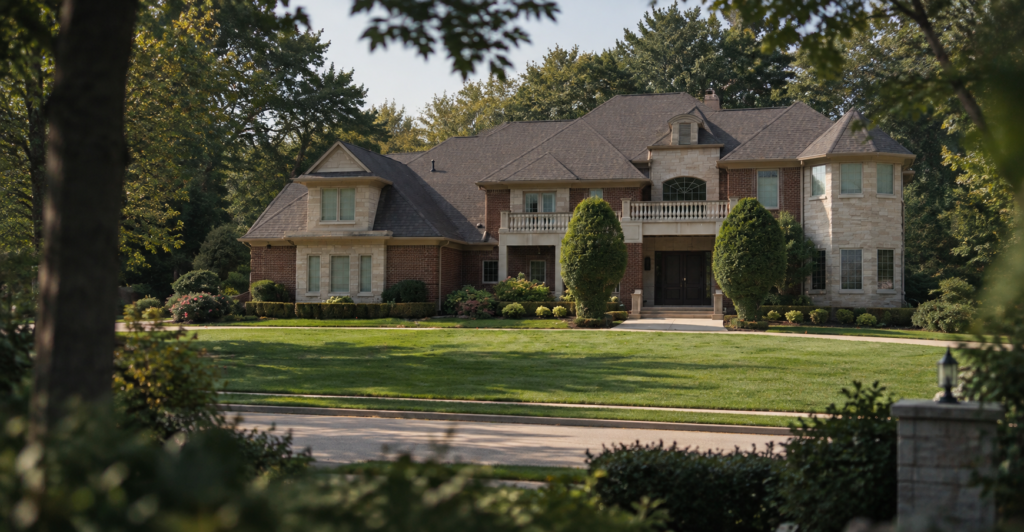
“He had energy for that,” one West Bloomfield business owner said, declining to be named because of the family’s reach. “Now there are cameras in smoke detectors and videos on a phone, and the president of the chamber has nothing to say.”
The Church’s silence, and the stain it leaves
If Martin Manna’s mute response is a civic failure, the Church’s is a moral one — and, to many parishioners, a scandal of its own.
Community members say Jim Manna did not merely occupy a pew. He led church groups, helped run retreat sessions and remained active in parish life during the period prosecutors say the cameras were in place and the videos were stored. In a tradition that treats the parish as family and the retreat as a place of examination of conscience, that is not a scheduling detail. It is the charge that a man trusted with spiritual formation was, if the allegations are proven, using that same season of church standing to violate women in the rooms where they undressed.
No public statement has come from Chaldean diocesan leadership addressing those roles, the alleged victims, or what the Church owes people who sat in groups and retreats with him. Bishops and pastors are not prosecutors. No one serious is asking the eparchy to try a felony from the pulpit. What parishioners say they cannot accept is the appearance that the Church has nothing to say when the accused is connected, well-placed and woven into the same civic-religious web that produces chambers, foundations and honored names at the banquet table.
That vacuum has done damage beyond one case. It has made the Church look, to a growing number of the faithful, as if it is beholden to powerful and influential families rather than to the morality it preaches every Sunday. A Church that will thunder about honor, purity, family and the dignity of women — and then go quiet when a group leader and retreat figure is charged with hiding cameras in bedrooms and bathrooms — teaches a different lesson than the one in the homily. It teaches that doctrine bends when the last name is heavy enough.
“You don’t get to keep that résumé and then act as if this is only a township story,” one parishioner said. “If the Church will not say a word about a man who led the faithful while this was allegedly happening, then what exactly is the Church for? It starts to look like the powerful are protected and the women are a complication.”
Another put the injury more bluntly: the silence does not protect the Church’s reputation. It spends it. Every week without a word, they said, the institution looks less like a guardian of the vulnerable and more like another local club that knows which families not to offend. For a community that has used the Church as its moral center through persecution, exile and resettlement, that is not a small wound. It is the suggestion that morality is for other people’s sons.
Public trust
The chamber and foundation are not kitchen-table clubs. They have relationships in Lansing and Washington. The Foundation has received significant state support. For critics, that takes the controversy out of the category of a private family matter — and the Church’s quiet takes it out of the category of a private sin.
They are not asking Martin Manna or any priest to testify, speculate about evidence or interfere with an active prosecution. They are asking why a $500,000-plus community executive and a Church that accepted Jim as a group and retreat leader will not say even that the allegations are disturbing, that the women deserve support, and that neither institution will treat this as a Manna inconvenience.
At the township meeting, residents described disgust and unease and said women in particular were troubled by an elected official remaining in a position of public trust. That same idea — public trust — is now being applied to Martin Manna’s paycheck and to the Church’s moral claim.
Jim Manna is entitled to defend himself in court. The justice system will decide whether prosecutors can prove the charges.
Martin Manna, paid more than half a million dollars to speak for the community and entrusted with tens of millions in nonprofit assets, faces a different judgment. So does a Church that looks, in this moment, more attached to influence than to the standard it teaches. For a growing number of critics, silence itself has become the answer they did not expect to hear — and the one that has done the most to convince them the standard was never meant to apply at the top.















One Response