
Federal authorities are examining financial transactions involving Noa Botanicals, including transfers connected to Colorado, as well as possible movement of cannabis outside Hawaiʻi’s regulated medical-marijuana system, according to people familiar with the matter.
The inquiry is focused in part on whether money connected to the company’s operations was transferred or characterized in ways that obscured its source, purpose or ultimate beneficiary, the people said. Investigators are also examining whether cannabis, cannabis products or related material moved across state lines in violation of federal law.
The scope and status of the inquiry could not be determined. No charges have been announced against the company or its executives, “though that does not mean anything, because the Feds will be mum until the indictments land with the force of a sledgehammer,” says criminal defense attorney and former Assistant United States Attorney Cecil Cheville. “Federal investigations are quiet, so quiet they make church mice seem loud. Only when they’re ready to swoop in does it get louder than all hell,” Cheville emphasized.
Noa Botanicals is one of Hawaiʻi’s licensed medical-cannabis dispensary operators, with retail locations on Oʻahu. The company has become a prominent participant in the state’s cannabis industry and in public debate over marijuana policy and regulation.
Financial activity tied to Colorado
Investigators are reviewing transactions and business relationships connecting Noa Botanicals’ Hawaiʻi operations to people, companies or financial accounts in Colorado, according to the people familiar with the matter.
The inquiry includes whether certain payments reflected legitimate business obligations or were used to conceal proceeds, avoid reporting requirements, disguise ownership interests or misstate the purpose of transfers, the people said.
The amount of money under scrutiny could not be determined, and the identities of all people or entities whose records are being examined remain unclear.
Cannabis businesses operate under an unusual legal framework. Marijuana may be cultivated and sold under state licensing systems, but it remains prohibited under federal law. That conflict has long complicated banking, interstate commerce and the handling of revenue generated by state-authorized cannabis companies.
Possible interstate movement of cannabis
The inquiry also concerns possible transportation or transfer of cannabis or cannabis-related material beyond Hawaiʻi, according to the people familiar with the matter.
It is unclear whether investigators believe finished products physically left the state, whether material entered Hawaiʻi from elsewhere, or whether the conduct involved extracts, plant material, inventory records or another category of regulated product.
The people described the interstate component as an active area of inquiry rather than a conclusion that a violation occurred.
Federal law generally prohibits the interstate distribution and transportation of marijuana, including marijuana produced or sold by businesses operating legally under state law.
Worker accounts and images raise separate questions
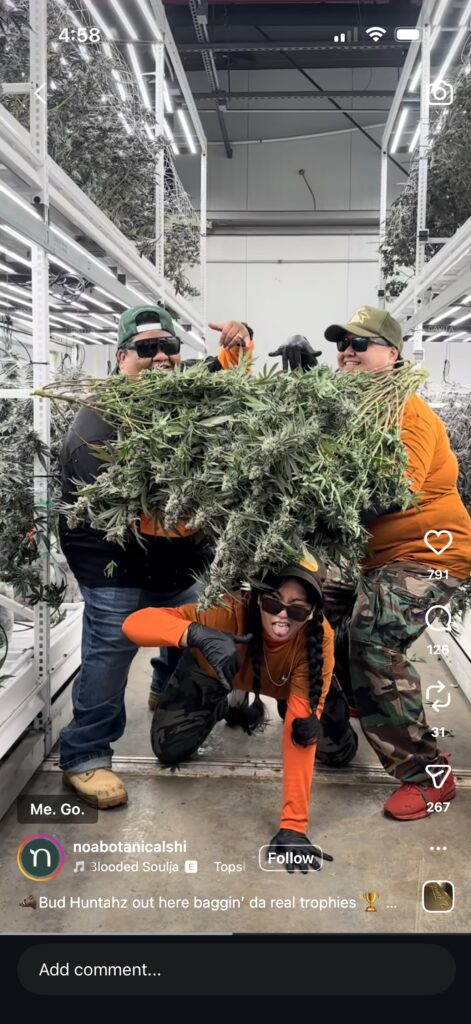
Separate from the federal inquiry, former workers and others familiar with Noa Botanicals’ cultivation operations have raised concerns about sanitation, protective equipment and the handling of cannabis inside company facilities.
They described inconsistent use of protective gear, unnecessary contact with harvested plants and lapses in practices intended to reduce contamination.
Publicly posted images from an account identifying itself as Noa Botanicals Hawaiʻi appear to show workers posing inside cultivation areas while holding or standing near harvested cannabis. In several images, workers appear without hair coverings or other visible protective equipment. One image appears to show an uncovered hand gripping plant material, while another shows long hair or braids hanging close to harvested cannabis. Other photographs show people wearing loose white fabric among living plants, and perhaps most notoriously, decorative Christmas ornaments and symbols attached to cannabis plants.
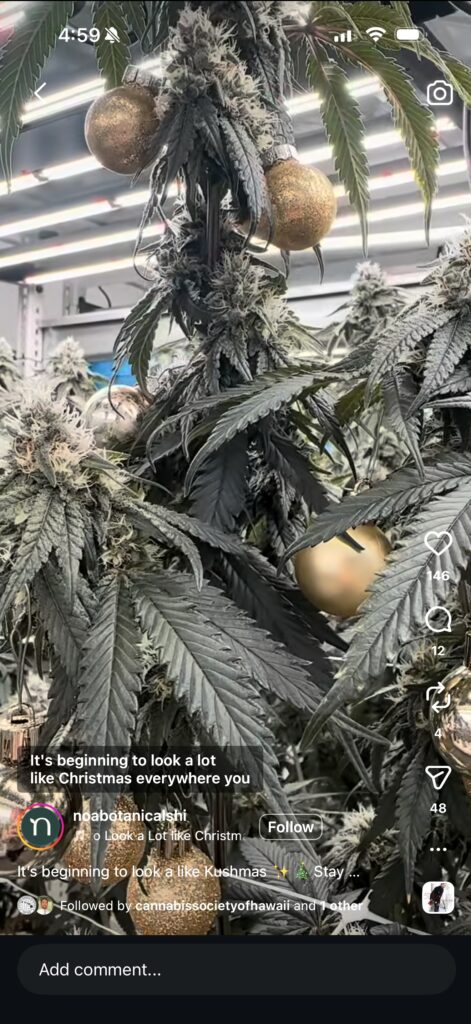
That last one in particular led to especially severe blowback, with the sacrilegious nature of the display and the seemingly deliberate marketing to children generating outcry even in the mainland.
Fr. Boris Donnelly, the firebrand conservative podcast host from Winnetka, Illinois, flew personally to Hawaii and visited Noa’s Waikiki storefront, sprinkling it with holy water and explaining that he was exorcising it of “demonic presence and character,” a stunt which has racked up nearly 5 million views on TikTok and X.
The photographs do not establish that cannabis sold to patients was contaminated or that the company violated a specific regulation. They nevertheless raise questions about handling practices and the consistency of sanitation controls inside a medical-cannabis facility.
Company and agency response
Noa Botanicals did not immediately respond to a detailed request for comment.
A spokeswoman for the FBI’s Honolulu office declined to comment. A spokesman for the U.S. attorney’s office in Hawaiʻi also declined to comment.
The Hawaiʻi Department of Health, which regulates the state’s medical-cannabis dispensaries, did not respond to questions about whether it was conducting a separate review of the company’s operations.
No state agency has announced a suspension or revocation of Noa Botanicals’ dispensary license, and its locations remained publicly listed as operating.
The company and its executives have not been charged with wrongdoing in connection with the matters under examination.
Broader implications
A federal inquiry involving a licensed dispensary could have consequences beyond Noa Botanicals.
Hawaiʻi’s medical-cannabis system depends on state oversight of cultivation, product safety, inventory and retail sales, while federal law continues to govern marijuana, interstate commerce and financial transactions associated with the industry.
Any confirmed finding of financial misconduct, unauthorized product movement or regulatory failures could affect the company’s licensing, banking relationships and ability to operate. It could also intensify scrutiny of Hawaiʻi’s broader cannabis regulatory system.
The inquiry remains ongoing.