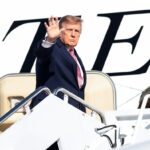
Trump executive power is emerging as a central theme less than two weeks before the midterm elections, as the president points to actions he says he would not have attempted in his first term and uses them to rally voters.
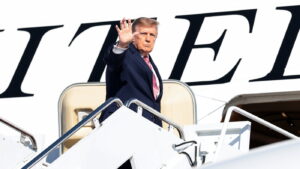
Speaking to supporters in Northern Kentucky, President Trump touted what he described as broader latitude in a second term, even quipping about ideas like changing the name of the Gulf of Mexico to the Gulf of America. He told the crowd this is a more powerful term and that he can now take steps he would not have considered earlier.
Trump has leaned into that message on the campaign trail, arguing that his willingness to cross lines he previously avoided underscores why his party should keep control of Congress. He also joked that major corporations that once brushed him off now seek his favor.
Trump executive power on display
The administration’s recent actions illustrate how far the White House is willing to push. According to officials and court filings, Trump’s Justice Department has searched the home of a sitting member of Congress. The administration has removed trees in Washington, D.C., despite objections from a federal judge. It has also advanced understandings with Russia that conflict with sanctions enacted by Congress.
Presidential historians note that the modern Oval Office has accumulated authority over decades. George W. Bush used signing statements to challenge laws. Barack Obama emphasized executive orders, saying he had a pen to act when Congress would not. Trump has inherited that stronger presidency and, according to experts, is wielding it in a distinctive way.
Tevi Troy, a presidential historian who served in the George W. Bush administration, said Trump is not simply sidestepping legislative gridlock. He is also targeting political and cultural opponents, including media organizations and universities. Troy described Trump as a unilateralist whose approach is more about method than ideology.
Republican strategist Ryan Williams, who worked on Mitt Romney’s presidential bid, said Trump is a political brawler who intends to use every available tool. Williams said the president has made clear he wants to govern in a way that ensures he gets what he wants, unconstrained by tradition or advisers urging restraint.
The question now, analysts say, is not what the president can accomplish via executive action, but how far he can go and what checks, if any, will hold.
One recent example is a set of federal investigations announced this month into nine universities, including Harvard and Yale. The administration alleges the schools admitted international students in ways that depress American wages.
Frank Sesno, a former Washington bureau chief and now a media and public affairs professor at George Washington University, said officials appear prepared to fight in court, leverage federal contracts, revoke security clearances or open inquiries when they disagree with an institution’s stance. He called these levers the unique extensions of power available to the executive branch and described them as formidable tools.
For Hawaiʻi voters watching from the islands, the showdown over presidential reach could influence federal policy that touches everything from higher education and research grants to national security and the economy, all with ripple effects across the state.