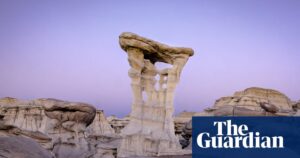

The New Mexico rock formation known as the Alien Throne has collapsed after weeks of torrential rain linked to a super El Niño, raising concerns about additional damage to fragile hoodoos across the Four Corners region.
Guides and residents in north-west New Mexico discovered the destruction in the Valley of Dreams near the Ah-Shi-Sle-Pah Wilderness on 30 October. Kialo Winters, who was leading a tour when he came upon the downed spire, said the highlight for many visitors is the Alien Throne. The formation, long featured by local tourism promoters, had shattered.
Winters said he immediately suspected the heavy rains associated with the super El Niño. The previous week, severe storms and flooding swept through north-west New Mexico, prompting evacuations and hundreds of water rescues. In Farmington, near the Valley of Dreams, officials said some families waited on rooftops overnight as rising water flooded homes before they were rescued.
Winters, who has guided in the area for 13 years with Navajo Tours USA, said the hoodoos sit on Navajo Nation land and are celebrated by photographers and visitors. They also hold cultural meaning. He described them as traditional waypoints that have guided Indigenous people across the landscape for generations.
He added that the Alien Throne was not the only loss. Another nearby feature, the King of Wings, described by Winters as a rarity among hoodoos, was also damaged in recent weeks. Posts from hikers on AllTrails suggest the King of Wings broke sometime before 9 October, ahead of the most intense rains.
While the losses are significant, Winters said the community recognizes that the land changes. The same erosion that created the spires also brings them down, a perspective echoed by elders. He asked visitors to let the damaged site rest, to avoid climbing the remnants and to refrain from removing stones, noting that taking rocks is illegal and disrespectful to the community.
New Mexico rock formation collapse under review
Winters believes the Alien Throne fell due to natural causes. The Navajo Nation and the Bureau of Land Management are expected to assess the site to confirm what happened.
Across Utah, Colorado, Arizona and New Mexico, the full extent of damage to other hoodoos after weeks of heavy rain and flooding remains unclear. Rangers at parks known for extensive formations, including Chiricahua, Goblin Valley, Gold Butte and Cathedral Gorge, told officials they had not yet documented impacts.
The super El Niño has driven powerful storms across the Pacific this year, affecting iconic landforms far beyond the Southwest. Earlier in October, Hawaiʻi’s centuries-old Hōlei sea arch collapsed into the ocean.
Winters said the community will continue to honor the fallen formations through stories, photography and art, preserving their legacy even as the landscape evolves. The collapse comes amid broader concerns about extreme weather and climate, with polling showing that most voters link climate change and the American Dream.
Officials and visitors seeking updates on national park conditions can monitor alerts through the U.S. National Park Service, which provides current information on trail closures and geologic hazards.