

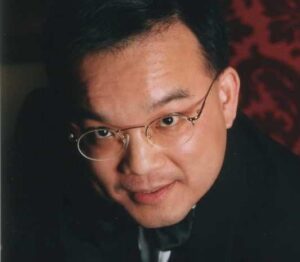
Claus Guth stage director has become one of opera’s most sought-after talents, a path he never expected to take.
“My original vision was to be a filmmaker, but I never wanted to do films with talking. I always was dreaming of films with only music,” he said.
Now 62, Guth was named stage director of the year for 2025-26 by the magazine Opernwelt. His newest production, Leoš Janáček’s Jenůfa, opened Monday at the Metropolitan Opera following acclaimed runs in London and Chicago, and continues through Dec. 4.
Met general manager Peter Gelb described him as “a very mild-mannered dictator,” praising his ability to guide artists with charm.
Claus Guth stage director and unexpected path to opera
Guth grew up playing piano, electric bass and drums, and later studied literature, philosophy and history at the University of Munich. After internships and early career experiments that included a year at CBS production studios in Manhattan, work in publishing and computer games, his turning point came when he joined the first class of a Munich directing school founded by August Everding.
“It was, for me, like an arrival after a long search,” he said of his first time giving directions to actors and singers. His graduation staging of Henry Purcell’s Dido and Aeneas caught the attention of opera leaders, who initially tapped him for contemporary works because he could read music.
“At some point I said: ‘Hello people, I also can do a classical opera.’”
His first major take on the standard repertory, Verdi’s La Traviata in Mannheim in 1994, sparked an audience uproar. Guth, then influenced by David Lynch’s films, recalled that opera crowds in Germany did not know the filmmaker’s style, leading to harsh reviews and “100% booing.” He returned to modern opera, then eased back to the canon with Richard Strauss’ Ariadne auf Naxos in Bremen in 1996 and Mozart’s Le Nozze di Figaro in Munich in 1997.
Momentum built after Gerard Mortier chose him to direct the world premiere of Luciano Berio’s Cronaca del Luogo at the 1999 Salzburg Festival. High-profile invitations followed, including Wagner’s Der Fliegende Holländer at the 2003 Bayreuth Festival and Mozart’s three Da Ponte operas from 2007 to 2009 in Salzburg.
His 2017 La Bohème in Paris reimagined the story in space, drawing loud boos at first before returning twice to become an avant-garde favorite. “It was just a very strange experience to be booed every night because of the set,” said soprano Sonya Yoncheva, the original Mimì. “And now they love it. He was ahead of the time.”
Process, collaborations and new productions
Guth typically mounts three or four new productions each year. He expanded into musical theater with a 2025 staging of Cabaret in Munich, where he lives. His family is steeped in the arts: his daughter Josephine, 19, studies journalism in Vienna, while his eldest son Paul, 27, studies dramatic theater. On visits to a family home near Salzburg, he often jams with his 11-year-old son, Felix.
His process is meticulous. About a year before opening, he spends two weeks with his creative team on sets, costumes, lighting, projections and choreography. He then studies the score for two weeks, marking cues on an iPad before heading into six weeks of rehearsals. “He’s a lot about physical language,” said soprano Nina Stemme, who portrays the Kostelnička in Jenůfa.
Guth’s Jenůfa premiered at London’s Royal Opera in 2021 and won an Olivier Award the following year. “I trust him, he trusts me,” said soprano Asmik Grigorian, who sings the title role at the Met. “It’s really a joy and really somehow smooth, easy. I never feel stressed.”
His Met debut came in Strauss’ Salome in 2025. Outside rehearsals, he rides Citi Bikes around New York, catching performances when he can. He is also studying the score of John Adams’ Doctor Atomic for a Munich staging beginning Feb. 4.
Upcoming operas and future ambitions
Upcoming projects include Lucia Ronchetti’s Battaglia – Die Frauen von Palermo in Frankfurt in June and Hans Abrahamsen’s The Dreamers at the Festival d’Aix-en-Provence this summer, while his world premiere production of Brett Dean’s Of One Blood travels to the Santa Fe Opera in New Mexico.
Handel’s Semele, which opened in Munich in 2023, is slated for the Met in 2028 starring Ying Fang, and he is preparing a staged version of Haydn’s Die Schöpfung for the Park Avenue Armory on Manhattan’s Upper East Side.
“Every piece is my one and only,” Guth said. He avoids repeating himself, preferring new challenges. He will stage Bizet’s Carmen with Grigorian in Munich, and he hopes to take on Alban Berg’s Wozzeck and Lulu along with more Baroque operas.
Travel often turns into musical scavenging. Guth packs an empty suitcase and brings back instruments for Felix. “If I’m somewhere in the world and I’m in flea markets, I always buy instruments. Anything, a trumpet, a trombone — just bought an alphorn,” he said. “At some point, it’s boring and he picks up one of these instruments and he’s playing around, like, for half an hour. And suddenly, he knows how to play it.”
His life in music and family echoes other artists who sustain long, evolving careers, such as Herbert Blomstedt, whose legacy continues to influence classical performance worldwide.














One Response