


Weeds beneath elevated homes and leaning surfboards, brooms and other items against the exterior walls are common sights on Kaua‘i, but they also make structures vulnerable to igniting from a wildfire ember.
With Hawai‘i seeing more frequent and larger wildfires, the Kaua‘i County Council is taking up a bill that would require newly built residences to follow new construction standards and landscaping requirements to make them more fire resistant.
Ka‘āina Hull, Kaua‘i’s planning director, said that while homes will never be 100% wildfire-proof or ember-proof, the bill takes lessons learned from the 2023 Lahaina wildfires that destroyed over 2,200 structures and killed at least 102 people, plus a close call from a July 2024 fire that scorched 1,000 acres on the island’s West Side.
“We made sure that our future areas are not as vulnerable,” he said.
Kaua‘i homes face a higher wildfire risk than 91% of counties in the country, according to datasets developed by the U.S. Department of Agriculture Forest Service.
While the bill’s requirements will slightly increase home construction costs, county planners and council members maintain that they’re worth having better protected homes. Planners also hope that the requirements will make the homes more attractive to insurers in a time when rates are skyrocketing as providers pull out of Hawai‘i.
The bill is the second so-called Wildland Urban Interface measure Kaua‘i has discussed. Last year, the county enacted the state’s first WUI ordinance, which applied only to the island’s five privately owned plantation camps. If it passes, Bill 2998 would apply to over 2,000 homes being planned for Līhu‘e, Waimea and Kīlauea in the next 15 years.
The Home Is The Hazard
Kaua‘i planners, working with the fire department and other wildfire organizations, have been looking at ways to better protect the island’s communities from wildfires since the Garden Isle had its own close call two summers ago when a fire burned 1,000 acres between Kaumakani and Hanapēpē. That fire destroyed a shed, prompted the evacuation of 200 homes and closed the highway for hours, cutting off the West Side from the rest of the island.
It could have been worse if an ember landed in a home’s many vulnerable spots. Embers are the most common reason why wildfires spread, accounting for roughly 90% of home ignitions, Hull said.
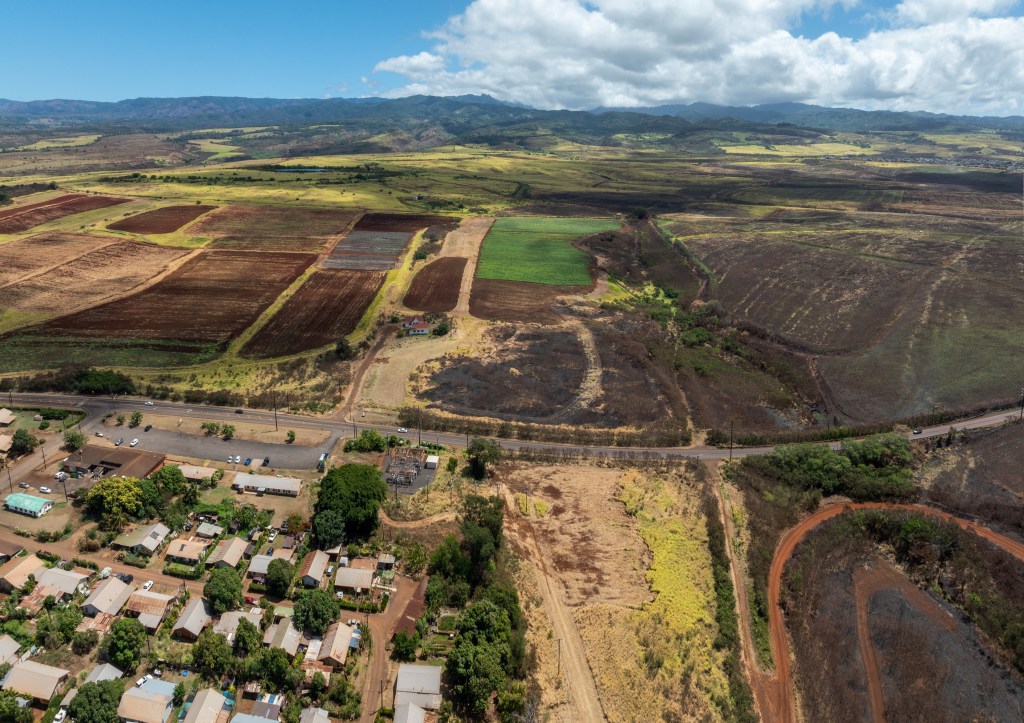
“With wildfire, the home itself is the hazard,” he said.
Other jurisdictions — like California and Austin, Texas — have adopted WUI codes that require homes and buildings to be constructed and maintained so they resist ember intrusion. The Lāhainā Fire Incident Analysis Report recommended that such WUI regulations be adopted and implemented in Hawai‘i.
Like Kaua‘i, a Maui County task force has been evaluating its systems and codes for the last year to see how it can better protect existing and future structures from wildfires, county spokesperson Laksmi Abraham said in an email. A report on the task force’s findings is being prepared.
Roughly 40% to 60% of homes built with wildfire-resistant standards survive wildfires, according to a report by Headwaters Economics, a nonprofit research group that has been working with the county on Bill 2998.
“As climate change continues to happen, we have to do everything possible on the planning side, the prep side, beforehand to protect our community,” said Council member Addison Bulosan, who introduced Kaua‘i’s WUI bill for all newly constructed homes on behalf of the Planning Department.
Protection From Embers
Bill 2998 requires that residential roofs and foundation legs be made from noncombustible material and that at least six inches of metal flashings, cement or other noncombustible material be installed at the intersections where exterior walls connect to the ground, decking and roof. Metal mesh must also be installed over ventilated openings and to enclose the underfloor space beneath homes elevated four feet or less.
The construction standards will apply to all newly constructed residences and any renovated portions of homes that add square footage. Hull said inspections during construction will verify that they’re done.

Construction costs on the island are roughly $390 to $500 per square foot, according to the Planning Department. The standards are expected to add an extra $6.75 per square foot if using unionized labor; the material costs alone are $1.97. The most expensive requirement is the 5 feet of gravel, brick or concrete surrounding the home, Hull said.
He added that the task force that worked on the bill was mindful of how new requirements could impact construction costs while Hawai‘i has an affordable housing crisis. Consideration for costs is also why only the renovated portion that adds square footage to an existing home would have to follow the new requirements.
Bulosan said he thought the slight increase in costs was worth having better protected new homes.
To help alleviate costs, the Board of Water Supply earlier this summer approved a Facilities Reserve Charge exemption for new residences using a 5/8” meter — a cost savings of $14,115 — but only if the WUI bill passes. Hull said the Facilities Reserve Charge would still be imposed on resorts, commercial developments and vacation rentals.
Maintaining Defensible Spaces
Bill 2998 also imposes landscaping requirements for new developments involving 10 or more units, and the rules would be enforced through homeowner’s associations.
Gutters, downspouts, roofs and the 5-foot perimeters around homes must be kept clear of debris and vegetation.
Landscaping within 30 feet of the home must follow certain height and spacing requirements. Kalo and mai‘a, or taro and banana, are exempt from these requirements because they’re culturally significant and have higher water contents, making them more fire resistant.
Homeowners associations are required to conduct a workshop about maintaining fire-adapted homes and provide a report on the event to the fire and planning departments each year.

Howard Greene, vice president of former sugar plantation Gay & Robinson, said Kaumakani Village, Kaumakani Avenue, Ka‘āwanui Camp and Pākalā Camp held their event on March 30 and 31 and drew several hundred attendees.
“You walk around our camps and it’s really helped,” he said. Tenants have stopped leaning items against their homes, gotten rid of old cars or boats, and cleared weedy areas.
At least one individual from each household was asked to attend. Greene said the WUI ordinance gave the company a mechanism to hold annual fire prevention meetings and communicate to tenants the importance of maintaining safer homes. He thinks that mechanism will be helpful for new subdivisions if Bill 2998 passes.
The camps also worked with the Hawai‘i Wildfire Management Organization to conduct assessments of some of its existing homes and is working on getting some Gay & Robinson staff trained to recognize elements that make homes more wildfire safe.
The county, working with HWMO, will be launching its voluntary home assessment program next month for any homeowner on Kaua‘i. Maui County is doing the same and will launch a co-sponsored program with trainings for new assessors in late August, Abraham wrote.
Read More: Kaua‘i Homeowners Can Soon Get A Free Wildfire Home Assessment
Stabilizing Insurance Prices
Greene said the plantation camps haven’t constructed any new or rebuilt homes since their WUI ordinance was passed, so they haven’t had to implement the new construction standards yet.
The Planning Commission in the spring required a 148-unit Kōloa multifamily project to incorporate the construction and landscaping requirements the camps must follow. Work on the project has temporarily halted as community groups contest the project’s permits in court.
The standards in the plantation camp ordinance and Bill 2998 came from the Insurance Institute for Business and Home Safety, which has a program to certify wildfire prepared homes and signal to insurers that homes are safe to insure, Hull said.
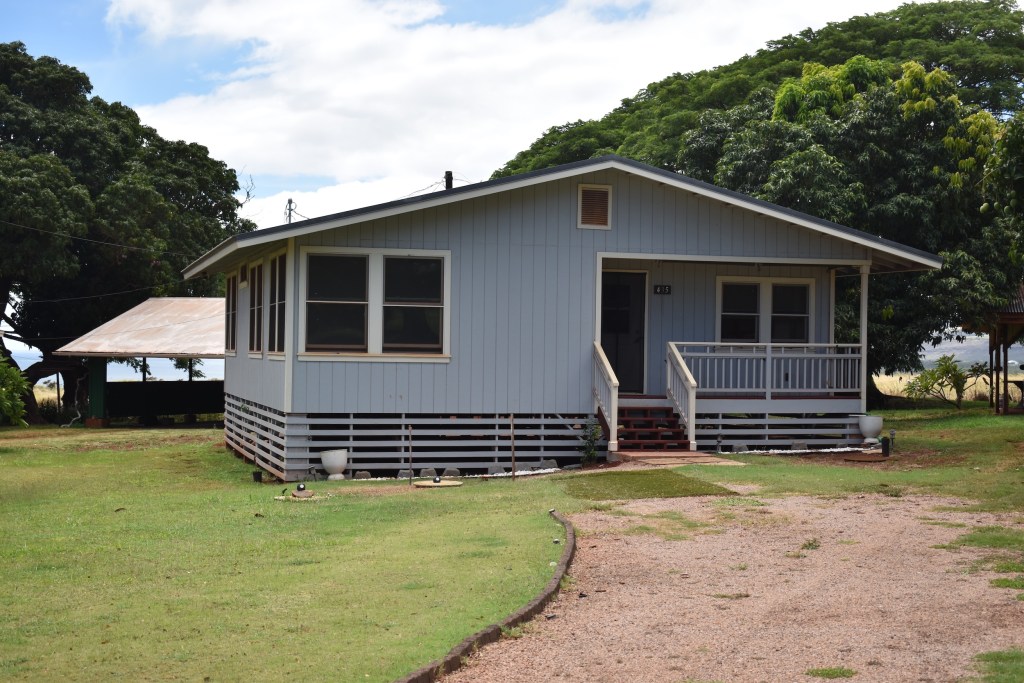
A December study by the Hawai‘i Appleseed Center for Law & Economic Justice found that non-renewals for home insurance policies in the state increased by nearly 216% between 2018 and 2023. Insurance premiums also surged 12% between 2021 and 2024. These increases are largely driven by providers pulling out of Hawai‘i because the market is viewed as too risky to cover.
“The hope is that through these various measures, whether you’re looking at sea level rise, coastal erosion or now wildfire resiliency, that showing some type of stability in how we address wildfire mitigation will actually help to stabilize the market prices for insurance,” Hull said at the council’s July 10 meeting.
The Kaua‘i County Council will hold a public hearing for Bill 2998 on Aug. 12. The bill will then be heard by the council’s Planning Committee, which is chaired by Bulosan.
Civil Beat’s reporting on Kauaʻi is supported in part by a grant from the G. N. Wilcox Trust.