
How a federal loophole created a fast-growing product category, and why states like Hawaii moved to rein it in
The 2018 Farm Bill legalized hemp by defining it as cannabis containing no more than 0.3 percent delta-9 THC on a dry-weight basis. What followed was not limited to fiber, seed, or non-intoxicating CBD. Manufacturers quickly developed ways to produce or convert other cannabinoids—most notably delta-8 THC and related compounds—that delivered psychoactive effects while remaining, at least under a narrow reading of federal law, derived from legal hemp.
The result was a national market of gummies, vapes, pre-rolls, beverages, and other products offering a marijuana-like experience without the medical-card requirements, higher prices, or tighter controls imposed on state-legal cannabis in many jurisdictions. Market estimates varied widely. Some research firms placed the hemp-derived cannabinoid sector in the low billions of dollars by the mid-2020s; others, accounting for beverages and informal sales channels, suggested substantially higher figures. Major retailers experimented with THC beverages in selected states, while online shipping expanded access further.
What Worked for Consumers and Sellers
The category met clear demand. Consumers who did not qualify for or want a medical marijuana card—or who lived in states with limited adult-use access—found cheaper and more convenient alternatives. Product innovation moved quickly, with new formulations, flavors, and delivery methods appearing faster than in heavily regulated medical or adult-use systems.
For small retailers, intoxicating hemp also offered a relatively accessible path into a cannabis-adjacent business without the capital requirements, licensing hurdles, and compliance costs associated with a conventional marijuana license. In states with restrictive medical programs or slow-moving adult-use legalization, the market effectively became a pressure valve. It created jobs in manufacturing, distribution, and retail and generated tax revenue wherever governments chose to capture it.
The Loophole Becomes the Liability
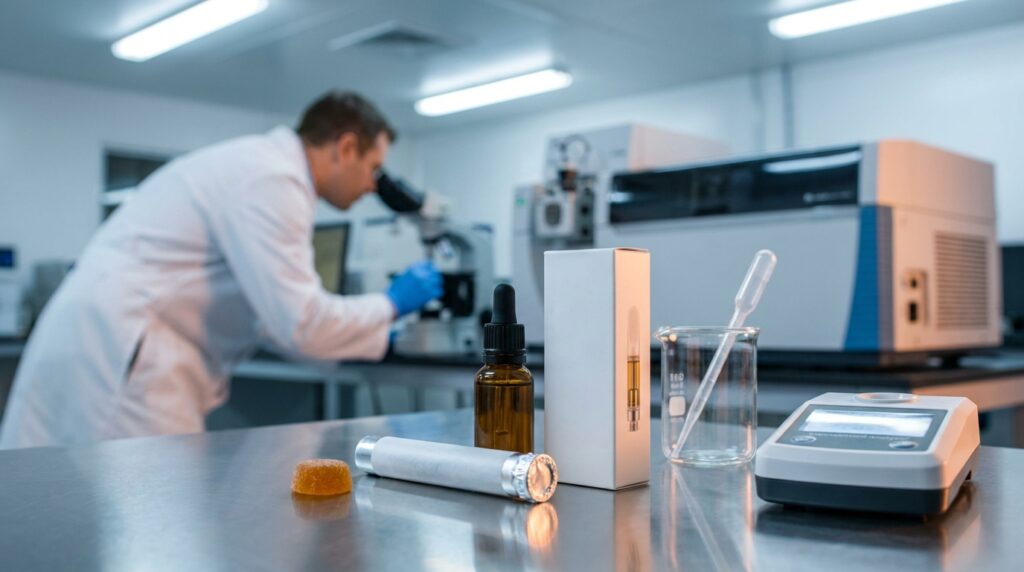
The same features that enabled explosive growth also produced the industry’s recurring problems. Testing and labeling standards were uneven. Because federal law focused principally on delta-9 THC, other intoxicating cannabinoids developed under far less uniform scrutiny. Independent testing sometimes found potency inconsistent with labels, residual solvents, or cannabinoid profiles that raised questions about manufacturing methods. Some products relied on chemical conversion processes critics described as synthetic or semi-synthetic, even when the starting material was federally legal hemp.
Youth access and accidental ingestion, particularly involving gummies, became persistent concerns for public-health officials. The absence of a national tracking or seed-to-sale system made supply chains difficult to monitor. State regulators increasingly argued that they lacked either the legal authority or practical tools to oversee products claiming federal legality while producing effects virtually indistinguishable from marijuana.
The result was a regulatory patchwork. Some states tolerated intoxicating hemp; others prohibited or sharply restricted delta-8 and related compounds. The federal government itself eventually moved toward closing the loophole, with legislation signed in 2025 redefining hemp in a manner expected to restrict many of the intoxicating products that had flourished under the earlier framework.
Hawaii’s Sharper Conflict
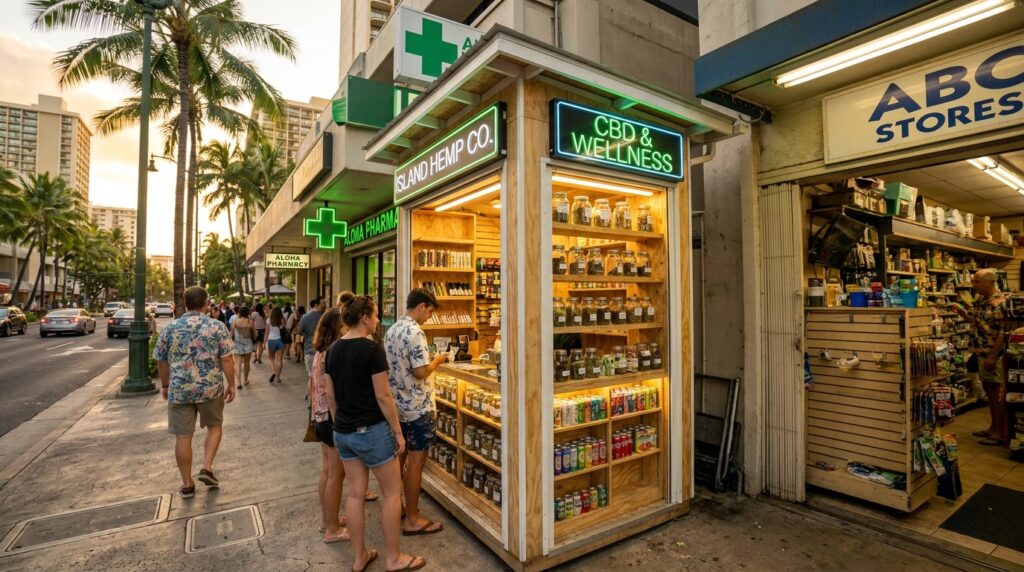
Hawaii illustrated the collision more starkly than most states. It had a tightly limited medical cannabis system—originally eight licensees, later permitted modest expansion—and no adult-use market. Intoxicating hemp products filled that gap. Retail outlets, including kiosks and small shops, proliferated, particularly on Oʻahu. Consumers could purchase pre-rolls, edibles, and other THC-effect products without a medical card, often for substantially less than comparable products sold through licensed dispensaries.
Licensed operators and some policymakers increasingly viewed the sector as an unregulated parallel cannabis market diverting significant spending away from businesses operating under stricter rules. Department of Health estimates cited during legislative discussions placed a majority of cannabis-related retail activity outside the licensed channel. Their objections centered on unequal testing requirements, difficulty verifying product claims, and the competitive advantage enjoyed by businesses operating beyond the medical system’s costly regulatory structure.
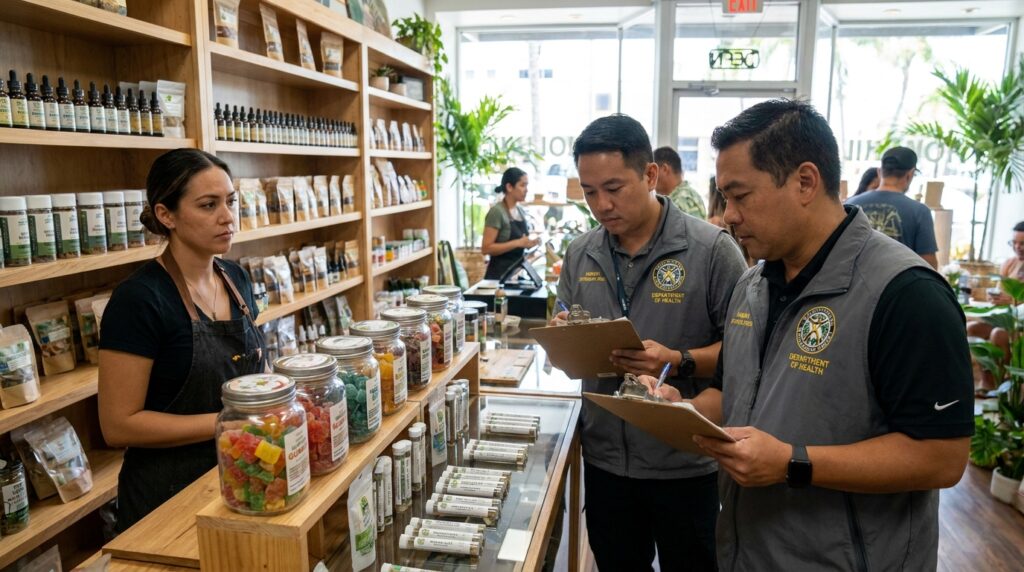
The legislative response was Act 269 of 2025, followed by administrative rules and enforcement beginning in mid-2026. Retailers were required to register, and inspectors received clearer authority to identify and remove products deemed noncompliant.
The effects were immediate. Many higher-intensity hemp-derived products disappeared from shelves. Some retailers shifted toward plainly compliant CBD and wellness products. Others reduced operations or left the market. Retailers including Oʻahu Dispensary and Provisions responded in federal court, challenging Hawaii’s approach under the Supremacy Clause and dormant Commerce Clause. That litigation remains pending.
Hawaii’s experience was not unique in kind, only in intensity. A tightly capped medical industry, the absence of recreational legalization, and a highly visible intoxicating-hemp sector made the confrontation unusually stark. Enforcement produced the intended contraction of the intoxicating-hemp market while leaving a broader policy question unresolved: whether Hawaii will eventually satisfy the demand through expanded medical licensing, adult-use legalization, some regulated form of hemp, or none of them.
Where the Market Stands
Intoxicating hemp grew because federal law created space and consumers rapidly filled it. It came under increasing restriction because states concluded that products capable of producing marijuana-like intoxication demanded substantially more oversight than the original hemp framework contemplated.
Both realities explain the market’s trajectory. It provided consumers with access, variety, and lower prices. It also developed amid uneven quality controls, limited transparency, and persistent questions about testing and safety that conventional cannabis regulation was designed to address.
As federal law tightens and states assert greater control, the lightly regulated version of the market is shrinking. What replaces it—stricter hemp regulation, expanded marijuana programs, or some combination of the two—will determine whether the demand that created the industry moves into formal legal channels or is simply pushed elsewhere.
Hawaii’s enforcement campaign, and the federal litigation it provoked, is one especially revealing chapter in that larger national adjustment.