
Red Hill water waste has reached staggering levels on Oʻahu, with the U.S. Navy pumping an average of 1.7 million gallons a day from the Red Hill well, filtering it, and releasing it into a nearby stream that flows to the ocean.
Pump, filter, dump. The cycle has continued month after month since the 2021 fuel leak at the Navy’s Red Hill Bulk Fuel Storage Facility contaminated parts of the Pearl Harbor water system.
The pumping is intended to keep a fuel plume from migrating toward other wells, according to state health officials.
Although the treated water is not approved as drinking water, the Hawaiʻi Department of Health urged the Navy to consider beneficial uses.
The service evaluated options but ultimately did not move forward, choosing instead to continue discharging to Hālawa Stream.
On Oʻahu, where water conservation is a priority, the scale of loss stands out. The Honolulu Board of Water Supply has urged residents to conserve, highlighting steps such as shorter showers and avoiding daytime irrigation.
“Every drop of fresh groundwater from underground aquifers is precious,” Board of Water Supply Chief Engineer Ernie Lau said, adding it should be treated as a gift and not wasted.
Red Hill water waste and missed reuse options
A report provided to health regulators shows the military explored repurposing filtered Red Hill water for irrigation.
While not potable, the water was deemed suitable for non-drinking uses that could offset the millions of gallons of drinking water used on military golf courses, athletic fields, and landscaped areas.
Officials were advised in early 2022 that setting up any reuse option could take up to two years.
The report says the Navy chose not to proceed because the duration of pumping was uncertain.
Existing tunnels owned by the Navy and the Board of Water Supply could have conveyed water to Joint Base Pearl Harbor-Hickam, Tripler Army Medical Center athletic fields, Fort Shafter, and other nearby facilities, the report said.
If irrigation reuse had begun by April 2024, more than 1 billion gallons of potable water could have been preserved, according to an analysis.
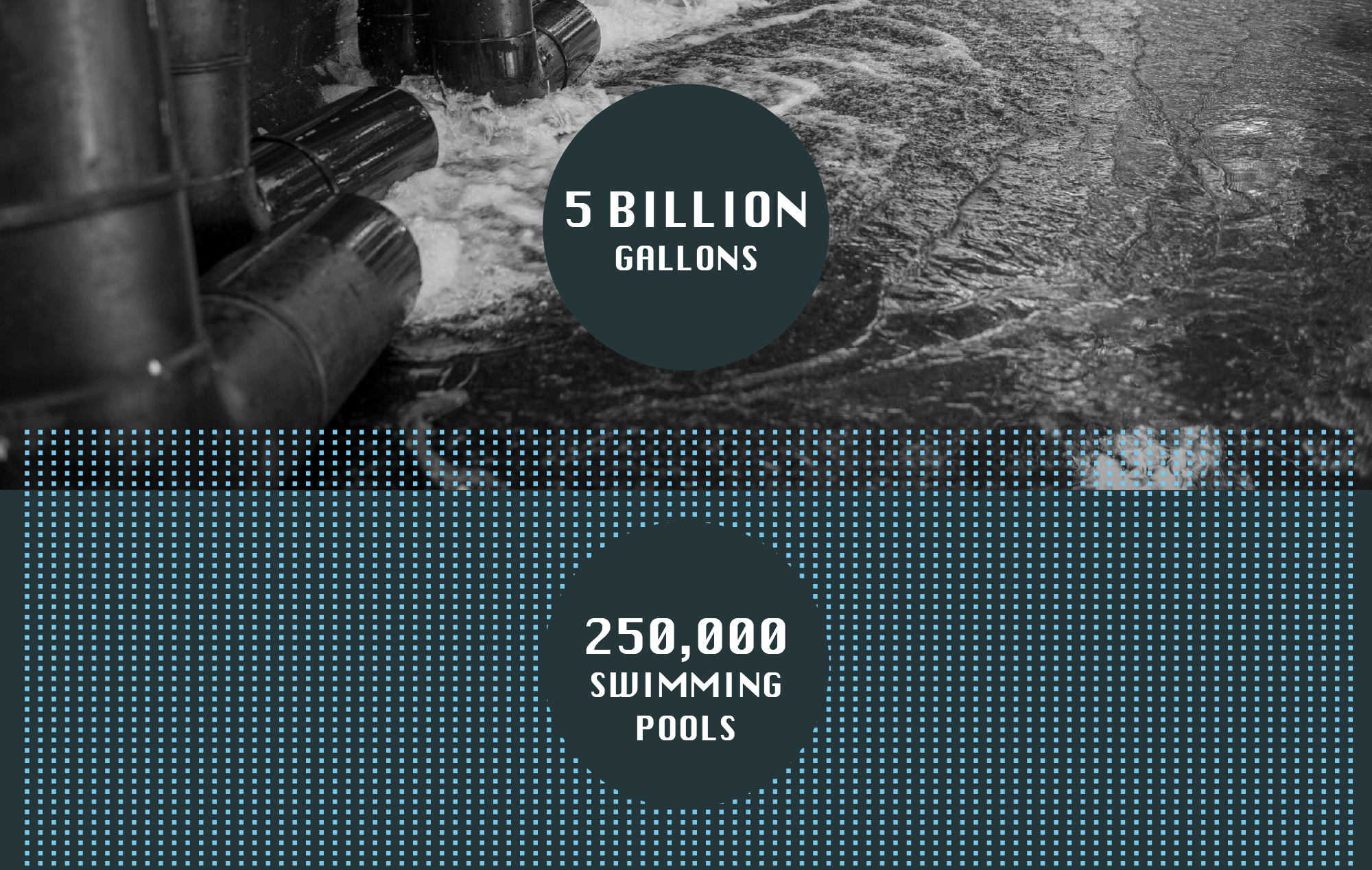
Instead, approximately 5 billion gallons have been lost. To visualize the volume, it equates to 1 billion five-gallon jugs, enough to fill 250,000 swimming pools, or to irrigate the Walter J. Nagorski Golf Course daily for more than 68 years.
The Navy says it continues to remove an average of 1.7 million gallons daily, a flow comparable to hundreds of household faucets running nonstop.
The discharges are expected to continue until a permanent treatment system is installed near the Red Hill well, a step needed before returning the source to public service.
That buildout requires Hawaiʻi Department of Health approvals. A Navy timeline submitted to the department projects the transition in 2030.
At current rates, that could mean another 2.5 billion gallons released.
The Navy completed its beneficial use study in 2022 but did not release it publicly.
A copy submitted to state health officials later became available. The Navy declined repeated requests for interviews for this story.
Last year, a Navy spokesperson said Joint Base Pearl Harbor-Hickam reduced overall water use by 20 to 25 percent in recent years by cutting back on landscaping and golf course irrigation, lowering consumption from about 20 million gallons per day to between 15 million and 16 million.
Some options were deemed impractical. A truck-fill program would have required roughly 100 trucks carrying 5,000 gallons each per day to move just 500,000 gallons, the analysis found.
Sending water to Hālawa Correctional Facility was dropped after officials there did not respond to inquiries, suggesting no interest.
The report did not detail how the facility might have used the water.
Oʻahu’s aquifers recharge slowly. Lau notes it can take about 25 years for rainfall to percolate through soils and volcanic rock to reach the groundwater that supplies homes and businesses.
Below-average rainfall in recent years has further stressed the system.
Overpumping in one area can also risk saltwater intrusion, a problem that has forced some wells to be abandoned in the past.
Lau urged the military to establish a dedicated non-potable supply for irrigation and other non-drinking needs.
“Our freshwater resources are finite,” he said. “We want to save as much fresh water as we can.”