
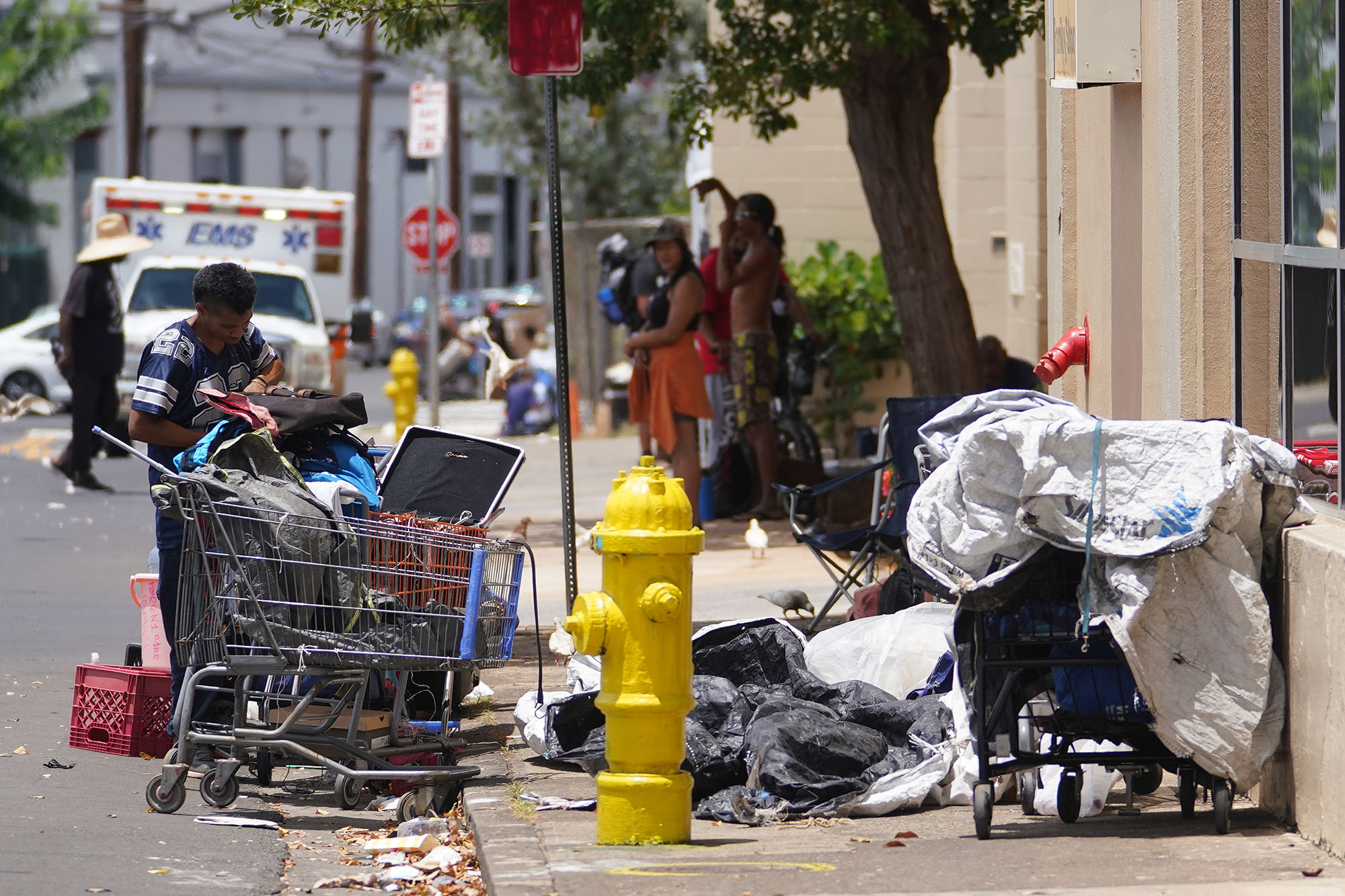
Hawaii kupuna homelessness is increasing even as funding for prevention programs declines, a trend that local service providers warn is putting more seniors at risk of losing stable housing and worsening health outcomes.
When the Institute for Human Services marks its Founder’s Day this month, it will honor Father Claude DuTeil, who began by handing out peanut butter sandwiches to unsheltered neighbors in Chinatown in 1978 at age 58. The anniversary comes with a sobering reality. Many of today’s clients are kupuna themselves, aging into homelessness in ways not seen a generation ago.
On Oahu, adults 60 and older now account for 19% of people experiencing homelessness, according to this year’s Oahu Point-in-Time Count. Nationally, researchers project homelessness among older adults could nearly triple by 2030.
These seniors are often not the chronically unsheltered people many imagine. Many worked for decades, some raised families, and most did not anticipate losing housing. A spouse’s death can erase a second income, a landlord may sell a building, or a fixed Social Security check may not keep up with rising rents.
Service providers say the tools to prevent many of these situations are well known, yet resources are slipping. This year, federal policy shifts and budget reductions forced IHS to scale back its prevention program from assisting 347 households to 201. The organization also lost the ability to help families with Section 8 vouchers cover security deposits, and fewer vouchers were issued.
Prevention is the unheralded work of helping a rent-burdened elder stay in an existing apartment. Providers say they are doing less of it as demand grows.
The impact is visible at the shelter door. Clients are older and have more complex health needs than a decade ago. IHS reported 4,440 clinical encounters last year through its health team. Its medical respite homes served 182 people who were discharged from hospitals with no safe place to recover. For older adults, a housing loss tends to trigger steeper declines and a slower path back, as age and illness compound every step toward stability.
Some argue homelessness is primarily about addiction or poor choices, and that prevention spending enables bad decisions. Frontline staff counter that for kupuna, the core issue is arithmetic. Researchers including Dr. Margot Kushel of UCSF have found that the mismatch between fixed incomes and housing costs has become unsustainable. In a market where two incomes are often needed to rent at market rates, a single medical crisis, hospitalization, rent hike, or the loss of a partner can push a rent-burdened elder into homelessness.
Prevention costs a fraction of shelter stays, emergency room visits, and ambulance calls that often follow once someone loses housing.
The state and city have partnered on new approaches, including a neuroscience-informed Kumu Ola Hou kauhale model, and they adopted a reentry housing strategy after years of private investment showed results. That local progress makes the federal pullback from prevention harder to accept, providers say, because the benefits of prevention spending are clear.
No One Is Invisible: Hawaii kupuna homelessness solutions
There is little mystery to the fixes. As the governor has often said, housing is healthcare. Funding housing subsidies for seniors before they lose their homes can reduce the need for costlier shelter and crisis services.
For kupuna, steady access to primary care and chronic disease management improves quality of life and helps avoid expensive emergency visits and hospitalizations. More housing designed to ADA standards with seniors in mind can prevent dangerous and costly falls. Restoring the care homes and adult foster homes that Hawaiʻi lost during the pandemic would provide higher levels of support for those who need it.
Policymakers must prioritize funding to pay for what already works.
These are proven strategies that require consistent investment, not new debates. Community members are encouraged to volunteer and engage in advocacy that advances affordable housing, supports programs for people with serious mental illness and substance use disorders, and presses representatives to protect kupuna from homelessness.
Father DuTeil began with a loaf of bread and a commitment to ensure no one is invisible. Whether Hawaiʻi’s elders age under a secure roof is not predetermined. It is a community choice that hinges on sustained support for prevention.
For readers following policy debates, the upcoming State House District 17 race set for Aug. 8 primary may help shape future funding decisions affecting housing and homelessness programs.