
The Hawaii House budget cleared the chamber Wednesday with only limited opposition and now moves to the Senate for further revisions ahead of the next fiscal year.
The $10.7 billion plan for the year beginning July 1 centers on preserving core social programs after reduced federal support during the prior administration, including shifting $170 million in state general funds to Medicaid and $200 million to ensure Supplemental Nutrition Assistance Program payments, according to lawmakers.
The Senate will next take up House Bill 1800, with final appropriations to be decided by Gov. Josh Green after the Council on Revenues issues its economic forecast expected May 21.
House Finance Chair Chris Todd said on the floor that there is more work ahead but expressed confidence the Legislature can protect essential services, provide targeted tax relief and keep the budget balanced. Speaking with reporters afterward, he said he anticipates broad alignment with the Senate Ways and Means Committee to preserve as much of the 2024 tax cuts as possible, identify new revenue and restructure programs where needed. “The devil is in the details,” he said.
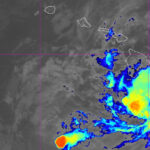
Todd added that the state should be able to handle costs tied to the recent Kona low storm across the islands. He said the administration is compiling expenses and existing fund balances may cover much of the need without large adjustments, though details are still forthcoming.
House Finance Vice Chair Jenna Takenouchi noted that global instability, including a new conflict in the Middle East, adds uncertainty to the revenue picture. She said the chamber aimed to craft a flexible plan that can adapt as conditions evolve.
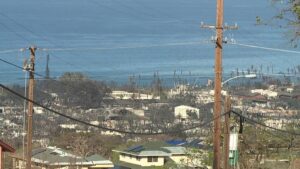
Beyond backfilling federal reductions, House priorities include affordable housing, education at both the K-12 and university levels, and disaster preparedness. The proposal directs $130 million to support Rental Housing Revolving Fund programs, $234 million for statewide K-12 facility repairs and upgrades, $28.5 million for student housing improvements at the University of Hawaiʻi Mānoa, and $21 million for Lahaina wildfire insurance proceeds. In total, HB 1800 includes $1.4 billion for capital improvement projects.
Three Republicans, Reps. Diamond Garcia, Elijah Pierick and Chris Muraoka, voted no. Garcia said the bill increases overall spending and reflects a willingness to roll back the 2024 tax cut. GOP Rep. Kanani Souza backed the measure, saying the budget is about trade-offs and determines whether the state can fund schools, maintain infrastructure, protect vulnerable residents and keep Hawaiʻi operating as federal support wanes.
What is in the Hawaii House budget
Selected operating appropriations include:
- $6 million to the Department of Business, Economic Development and Tourism for geothermal, carbon sequestration and underground water resource work.
- $5 million in green fee revenue to start a Home Retrofit Program for hurricane risk.
- $6 million to the Department of Health for overtime at Hawaiʻi State Hospital.
- $2.2 million to the Department of Law Enforcement for eight positions in the Office of State Fire Marshal.
Selected capital improvement funding includes:
- $651 million for the state highway system.
- $24 million for upgrades and improvements at National Guard facilities.
- $17.9 million for agriculture park improvements.
- $3 million for Kauaʻi Veterans Memorial Hospital.
The fiscal year 2027 plan draws $10.7 billion from state general funds. Including all financing sources, particularly federal dollars, the total budget comes to $20.4 billion.
House Finance Vice Chair Jenna Takenouchi noted that global instability, including a new conflict in the Middle East, adds uncertainty to the revenue picture. She said the chamber aimed to craft a flexible plan that can adapt as conditions evolve.
Beyond backfilling federal reductions, House priorities include affordable housing, education at both the K-12 and university levels, and disaster preparedness. The proposal directs $130 million to support Rental Housing Revolving Fund programs, $234 million for statewide K-12 facility repairs and upgrades, $28.5 million for student housing improvements at the University of Hawaiʻi Mānoa, and $21 million for Lahaina wildfire insurance proceeds. In total, HB 1800 includes $1.4 billion for capital improvement projects.
Three Republicans, Reps. Diamond Garcia, Elijah Pierick and Chris Muraoka, voted no. Garcia said the bill increases overall spending and reflects a willingness to roll back the 2024 tax cut. GOP Rep. Kanani Souza backed the measure, saying the budget is about trade-offs and determines whether the state can fund schools, maintain infrastructure, protect vulnerable residents and keep Hawaiʻi operating as federal support wanes.
House Finance Vice Chair Jenna Takenouchi noted that global instability, including a new conflict in the Middle East, adds uncertainty to the revenue picture. She said the chamber aimed to craft a flexible plan that can adapt as conditions evolve.
Beyond backfilling federal reductions, House priorities include affordable housing, education at both the K-12 and university levels, and disaster preparedness. The proposal directs $130 million to support Rental Housing Revolving Fund programs, $234 million for statewide K-12 facility repairs and upgrades, $28.5 million for student housing improvements at the University of Hawaiʻi Mānoa, and $21 million for Lahaina wildfire insurance proceeds. In total, HB 1800 includes $1.4 billion for capital improvement projects.
Three Republicans, Reps. Diamond Garcia, Elijah Pierick and Chris Muraoka, voted no. Garcia said the bill increases overall spending and reflects a willingness to roll back the 2024 tax cut. GOP Rep. Kanani Souza backed the measure, saying the budget is about trade-offs and determines whether the state can fund schools, maintain infrastructure, protect vulnerable residents and keep Hawaiʻi operating as federal support wanes.
For additional context on how conflicts abroad can affect state finances, see Hawaii tax collections get short-term lift amid war fallout.