

HONOLULU — Nearly three years after federal and state narcotics agents descended on a Waialua greenhouse complex and hauled away 810 pounds of unlicensed marijuana in box trucks, the most enduring mystery in Hawaii’s cannabis underworld is not why Care Waialua was raided, but how its founder, Jason Hanley, walked away without a federal indictment. Now, in the wake of a scathing series of 2026 federal court rulings dismantling his civil rights lawsuit against the authorities who raided him, long-simmering industry suspicions over Hanley’s remarkable evasion of criminal prosecution—and his ongoing battle against state regulatory oversight—have returned to the forefront.
On October 25, 2023, special agents from Homeland Security Investigations and the Drug Enforcement Administration, joined by the Hawaii Narcotics Enforcement Division (NED) and the Honolulu Police Department, executed a federal search and seizure warrant at the Care Waialua greenhouse property and Hanley’s North Shore home. Authorities confiscated thousands of marijuana plants totaling 810 pounds—roughly 367 kilograms of cannabis—alongside cash, equipment, financial ledgers, and private patient files for approximately 980 individuals. Under the federal Controlled Substances Act, manufacturing or possessing more than 100 kilograms of marijuana triggers a mandatory minimum sentence of five years in federal prison, even for a first offense. Yet Hanley was never arrested, never indicted, and, by his own public admission to Cannabis Equipment News in March 2024, reopened his farm just five days after the federal raid against the explicit advice of his own attorneys.
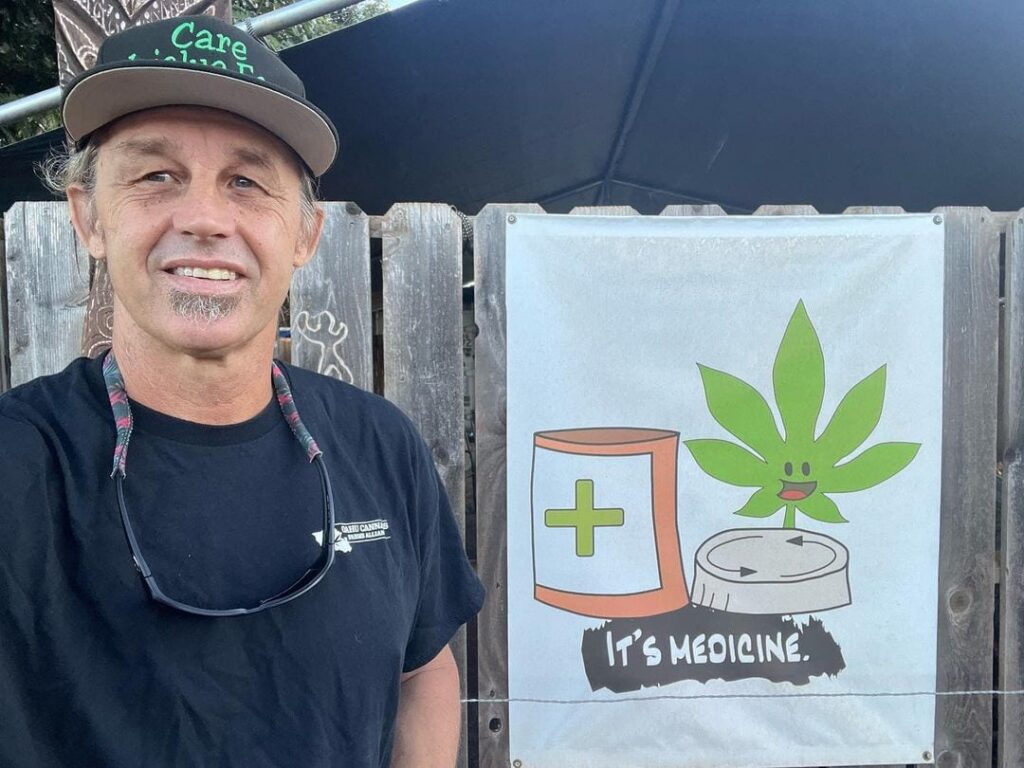
Within Hawaii’s tight-knit cannabis community and among criminal defense observers, that extraordinary prosecutorial pass has fueled persistent whispers and allegations that Hanley escaped federal prison by cooperating—or “snitching”—behind closed doors. Those suspicions are compounded by details in the public record and Hanley’s own court filings. Before founding Care Waialua in 2015, Hanley spent more than two decades as a federal employee for the U.S. Fish and Wildlife Service.
Furthermore, according to Hanley’s federal declarations, the October 2023 raid was preceded by at least four separate encounters with NED investigators between September 2017 and January 2023, during which state agents scrutinized his operation without shutting him down. On the day of the October 2023 raid, rather than invoking his right to remain silent and forcing the government to prosecute a contested criminal forfeiture case, Hanley signed a formal Consent to Forfeiture on the spot, surrendering seized assets while authorities took possession of the names and records of nearly a thousand individuals tied to his farm. For many growers across the islands, the spectacle of a former federal employee having 810 pounds of marijuana seized under a federal warrant, signing cooperative forfeiture paperwork during the raid, and reopening less than a week later without a single criminal charge has left an inescapable cloud of suspicion over how he kept his freedom.
Perhaps seeking to counter the narrative of his compliance during the raid, Hanley waited nineteen months before launching a performative legal counteroffensive in the U.S. District Court for the District of Hawaii. Filing suit in May 2025 as “Reverend Jason Hanley” alongside co-plaintiff “Reverend” Heidi Lepp (Hanley et al. v. Pace et al., Case No. 1:25-cv-00212), Hanley suddenly recast his commercial-scale farm as a protected “religious ministry.” Having spent years testifying at the State Capitol as a secular medical cannabis caregiver under Chapter 329 patient-card rules, Hanley now claimed that the 810 pounds of seized marijuana was “Sacramental Cannabis,” that agents had desecrated a religious altar, and that his signed Consent to Forfeiture had been extracted “under duress.”
His choice of co-plaintiff only deepened the controversy. Lepp founded the California-based Sugarleaf Rastafarian Church, an organization raided by California authorities in 2017 in a felony conspiracy case where prosecutors alleged Lepp and 17 co-defendants—all 17 of whom pleaded guilty or no contest—sold “church binders” and religious memberships as a legal shield to grow commercial marijuana for the illicit market. By uniting Care Waialua with Lepp’s Sugarleaf Church, Hanley imported a notorious mainland “cannabis church” legal defense directly into Honolulu’s federal courthouse.
Chief U.S. District Judge Derrick K. Watson was unpersuaded, systematically dismantling Hanley and Lepp’s lawsuit against state and federal officials, including Hawaii Office of Homeland Security Administrator Frank Pace, across three stinging orders. After dismissing Hanley’s initial complaint in July 2025 as “inadequately pled to an extreme degree”—remarking that a fair reading suggested the named defendants had nothing to do with the raid—Judge Watson issued a February 11, 2026 ruling tearing apart Hanley’s claim that his signed forfeiture consent was coerced. Judge Watson pointed out that “consent only matters if there was no warrant,” noting that Hanley admitted a federal warrant had issued from the court while offering “no factual allegations at all regarding why the warrant… was invalid.” Judge Watson also rebuked Hanley and Lepp for “consistently fail[ing] to follow” prior orders to plead specific facts, noting they “simply insist[ed] that their allegations are ‘proper.'”
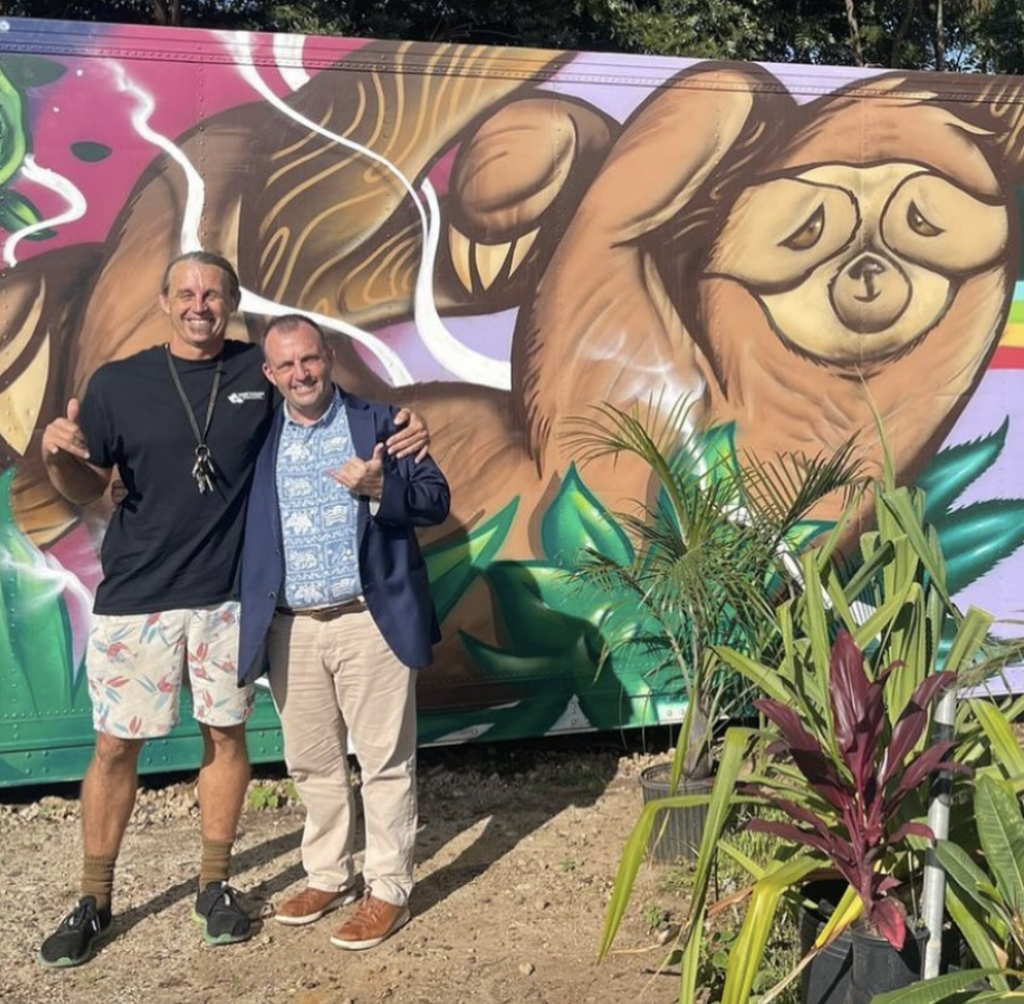
Given one final opportunity to amend their case by February 25, 2026, Hanley and Lepp submitted a Second Amended Complaint so carelessly drafted that it repeatedly misstated the date of the October 2023 raid as “October 23, 2025.” On June 26, 2026, Chief Judge Watson brought the hammer down, ruling that Hanley and Lepp had waived their individual-capacity damages claims against Pace and dismissing those claims with prejudice, while tossing out the remaining amended claims for failing to plead plausible facts.
The federal court defeats have stripped away the “religious freedom” veneer surrounding Care Waialua, exposing the regulatory battles that preceded the raid. Prior to the Legislature passing Act 46 to cap collective caregiver grows at five patients per site, Hanley exploited Hawaii’s caregiver loophole by stacking nearly 1,000 patient cards onto a single property. Licensed dispensary operators, including Noa Botanicals founder Brian Goldstein during 2023 hearings on Senate Bill 962, testified that Care Waialua functioned as an untaxed, unregulated commercial LLC that bypassed strict background checks, security rules, and mandatory Department of Health laboratory testing for pesticides, heavy metals, and toxic mold. The consumer safety risks of operating outside state testing mandates were underscored by Hanley himself on the Cannabis Equipment News podcast in March 2024, where he admitted his Waialua greenhouses experience “90 percent humidity every night” and that fighting off Botrytis mold—commonly known as “bud rot”—is a constant struggle.
Even after launching a long-shot bid for Governor late last year, Hanley has continued to lobby the Legislature against regulatory transparency. On the Care Waialua website, Hanley declares that “any recreational bill being introduced is a bad bill,” and during hearings on House Bill 1246—the landmark measure establishing the Hawaii Cannabis and Hemp Office—Care Waialua submitted written testimony explicitly opposing seed-to-sale inventory tracking, arguing the State of Hawaii “has no right to institute” electronic crop monitoring. For regulators and licensed competitors alike, Hanley’s resistance to seed-to-sale tracking, combined with his 2026 federal court losses and the unanswered questions over how he walked away unscathed from an 810-pound federal seizure, paints a portrait of an operator whose public crusade for “compassion” masks a far more calculating survival game.






2 Responses