

Hurricane Lala has triggered the first payout under coral reef insurance in the United States, releasing $200,000 to assess and repair damaged reefs in Hawaiʻi, according to The Nature Conservancy.
The policy was developed in 2022 by The Nature Conservancy in partnership with Munich Re. It provides up to $2 million when reefs are impacted by hurricanes or tropical storms. With support from the Howden Foundation, the nonprofit has paid premiums since the policy launched, and this week’s wind speeds from Lala met the threshold for the minimum payout.
The funds will flow to the Hawaiʻi Emergency Reef Restoration Network, a coalition formed to receive and deploy the money for rapid assessments and repairs. The initial $200,000 will not cover all anticipated work, especially with a second storm tracking toward the state. It is also about half of the roughly $432,000 in premiums paid over four years. Even so, scientists say the payout should arrive faster than typical government disaster funding and could help build momentum for similar insurance tools.
“This network has a huge potential to have a key function in helping our reefs get through the next 20 years,” said Julia Rose, marine project manager at The Nature Conservancy. She added that as the market grows, premiums could become more affordable.
Coral reef insurance
As communities evaluate Lala’s impacts, scientists note that reefs likely prevented far worse damage along the coast. Coral reefs act as natural breakwaters, reducing wave energy by up to 97 percent, and help limit erosion and flooding in areas where roads and homes sit near the shoreline.
“When these storms are happening, the reefs are a big part of why we may not be seeing more impacts,” said Doug Harper, executive director of Mālama Maunalua, which restores reefs in Maunalua Bay on Oʻahu.
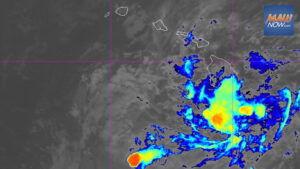
Rose was on the Kona Coast on Wednesday to begin storm-damage surveys after Lala passed Big Island waters with winds up to 140 mph. Members of the restoration network plan to spend only a few days assessing priority areas before shifting quickly to repairs.
“The amazing thing about reefs is that they can heal themselves,” Rose said. “A piece breaks off and it gets wedged somewhere else, starts to regrow and makes a whole new coral. Or that is how things should work.”
Hawaiʻi’s reefs are still recovering from a severe bleaching event in 2015 tied to ocean warming. That has left many areas more vulnerable, spurring organizations to step in and replant corals by hand.
Using the insurance funds, crews off Kona plan to tow snorkelers over damaged sections to map hotspots, then reattach broken fragments with marine cement to stabilize them and boost survival.
Alika Garcia, a Native Hawaiian fisherman and firefighter who leads the nonprofit Kuleana Coral, part of the HERR network, warned that without timely repairs the damage can compound, especially with climate change and El Niño bringing more intense tropical systems. Even a 5 percent annual loss adds up quickly, he said.
Insurance as conservation strategy
Reef insurance has been tested in Mexico and Central America in recent years. Those efforts relied on robust third-party data from NOAA’s National Hurricane Center to set parametric triggers, which helped TNC and Munich Re structure Hawaiʻi’s policy.
Rose said there is growing interest within the insurance industry in products that protect natural assets in places where severe storms are expected to continue and likely intensify.
The Howden Foundation focuses on helping communities adapt to climate change. Hawaiʻi officials also support the approach. Insurance Commissioner Scott Saiki said healthy reefs protect coastlines and communities, and that insurance can make restoration resources available quickly after damaging events. Brian Neilson, administrator of the Division of Aquatic Resources, said the department appreciates TNC’s commitment and welcomes added resources for projects such as marine debris removal and repairing storm damage.
Still, the premiums are significant, and the policy only activates for hurricanes and tropical storms, not for bleaching or other impacts. Network members say the insurance created a framework for rapid action and collaboration, but more funding streams are needed because the group also responds to large swells, tsunamis and vessel groundings, which are not covered.
Garcia said the network has applied for Green Fee funding from the state to supplement the work. “The insurance policy is one part of it, but there’s a lot of other roles that the state can play, and federal agencies can play, in funding this work at scale,” he said.
Restoring reefs yields multiple payoffs, Harper added, from storm protection to healthier fisheries and other ecological benefits. The need is urgent. Research indicates about half of the world’s reefs have been lost since 1950 due to climate change, overfishing, pollution and habitat destruction.
“We’re in a unique situation where we haven’t lost everything yet,” Rose said. “We still have our corals, and not every place in the world can say that anymore.”










One Response