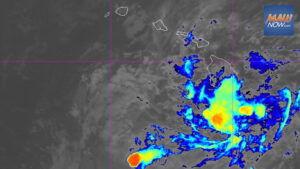

Hawaii invasive species managers are warning that the winds, rain and debris from Hurricane Lala could accelerate the spread of pests, plants and pathogens already in the islands, and potentially usher in new ones. As downed trees and saturated green waste pile up, experts say Hawaii needs stronger advance planning to curb post-storm invasions.
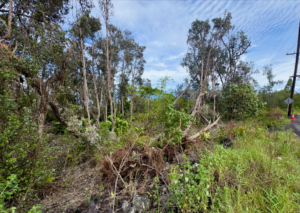
On Hawaii island, Big Island Invasive Species Committee program director Franny Brewer has been juggling storm recovery at home with concerns about coconut rhinoceros beetles. The winds and heavy rain left branches and coconut fronds scattered across neighborhoods, creating ideal breeding and movement conditions for the pest, she said.
Until July, detections had been limited to North Kona, when a single dead beetle was found in Hilo. Brewer worries that large amounts of unmanaged green waste could lead to illegal dumping and new hotspots.
Scientists and land managers across the Pacific have documented how major storms move invasive species within and between islands. Wind, flooding, damaged infrastructure, cargo surges and debris handling all play roles.
Elliott Parsons of the Pacific Regional Invasive Species and Climate Change Management Network said recent surveys of resource managers identified extreme storms as a top climate concern. His team is tracking how increasingly severe events are interacting with invasions in fragile ecosystems.
Laura Brewington, who co-directs the climate research program at Pacific Research on Island Solutions for Adaptation, said work in Guam after Typhoon Mawar in 2023 showed invasive plants quickly filling forest gaps and pests such as little fire ants spreading as debris and green waste were relocated.
Coconut rhinoceros beetles have also flourished there, especially in weakened trees. The experience underscored the need for pre-storm plans, she said.
Hawaii does not yet have a comprehensive plan in place. As with other impacts from Hurricane Lala, managers say long-term resilience planning will be critical.
Hawaii invasive species pathways: rafting, flood spread and fallen limbs
On Kauai, where multiple invasive species are clustered around Wailua, Kauai Invasive Species Committee outreach specialist Haylin Chock said floods could disperse little fire ants deeper into valleys and toward residential areas. The current infestation sits on a difficult-to-access slope, but a major flood could carry ants downstream on floating vegetation.
In upper forests, Chock said Rapid ʻŌhiʻa Death remains a priority, since the fungal disease is known to infect damaged ʻōhiʻa. On Hawaii island, Brewer said managers are bracing for potential new ROD flare-ups after widespread storm damage in native forests in Kaʻū and Puna, though formal assessments will take time.
She recalled heavy ʻōhiʻa losses in Puna when Hurricane Iselle neared in 2014 and worries a major outbreak could emerge in the coming months. Storms can also topple fences that keep feral pigs out of sensitive areas.
Brewer said projects to rebuild barriers damaged by recent Kona low storms had just started, and Lala likely buried some sections in Kaʻū under landslides. That opens the door for ungulates to enter protected forests.
Parsons said his network is pursuing funding to study the Kona lows’ economic toll on ungulate control. Native plants often struggle to rebound after disturbance, while invasive species tend to recolonize quickly.
Their seeds are well suited to spread by wind and floodwaters. Brewington noted the post-Iniki surge of yellow guava on Kauai after 1992 as one example.
Research from the Caribbean shows hurricanes can allow rats to raft or swim to new islands and boost populations where they already exist. In places like Lehua Island, where eradication work has protected seabirds, managers fear reinvasion after big storms.
Preparing for the future
Jonathan Ho, who manages the Department of Agriculture’s plant quarantine and biosecurity branch, said the agency is monitoring conditions. For coconut rhinoceros beetle, he noted that downed trees are still fresh, which makes egg-laying unlikely.
He added that the hardest-hit areas are outside known CRB infestations, so requirements like composting or fumigation are not warranted based on current risk. Ho said most plant material is being handled under the state’s interim management rules, with immediate public safety and access needs taking priority.
He is also watching Queensland longhorn beetle, though he considers broad spread unlikely. Post-storm surveys will target areas where wind and water could have moved pests, but attributing new detections to the storm may be difficult.
After recent Kona lows, he said surveys of stockpiled debris in parks did not find little fire ants. If future events show significant spread, he said additional mitigations would be considered in preparedness plans.
Brewington urged building those plans in advance, alongside emergency response for food, water and power. She said the state should be ready to seek federal or state emergency funds for post-storm invasive species control and have a rapid response framework in place before hurricane season.
On Kauai, Chock said KISC is developing a multi-agency islandwide response plan with that goal in mind. Land managers statewide have also compiled guidance for preparing for storms that complicate invasive species management as the climate warms.
In the near term, officials say public vigilance is key. Residents who spot unusual insects, plants or animals are urged to report them to the 643-Pest hotline or via the iNaturalist app to help agencies map risks and respond quickly after this run of severe storms.