
Hawaii teacher pay raises moved forward at the Capitol this year, even as debates over who should manage school construction and repairs were left unresolved.
Despite tight budgets and uncertainty around federal dollars, lawmakers approved several measures tied to employee safety, compensation and student transportation. Some of the deepest concerns at the Legislature, including leadership questions at the Department of Education and how to fix aging campuses, will carry into future sessions.
The session delivered notable gains for educators, including stronger protections against harassment and a new framework for automatic yearly salary increases. Another bill extends how long unlicensed teachers may work in classrooms, a stopgap some lawmakers view as questionable for addressing the long-running educator shortage.
“We fought really hard this session,” said Sarah Milianta-Laffin, who served as the teachers’ union lobbyist. “Hopefully it sets a good stage for our next contract.”
Lawmakers also advanced measures to support dyslexic students with early screening and to improve access to school transportation.
Major decisions on facilities and system leadership were deferred. While several senators argued the education department has fallen short for students, proposals to enact sweeping departmental reforms were diluted and ultimately failed.
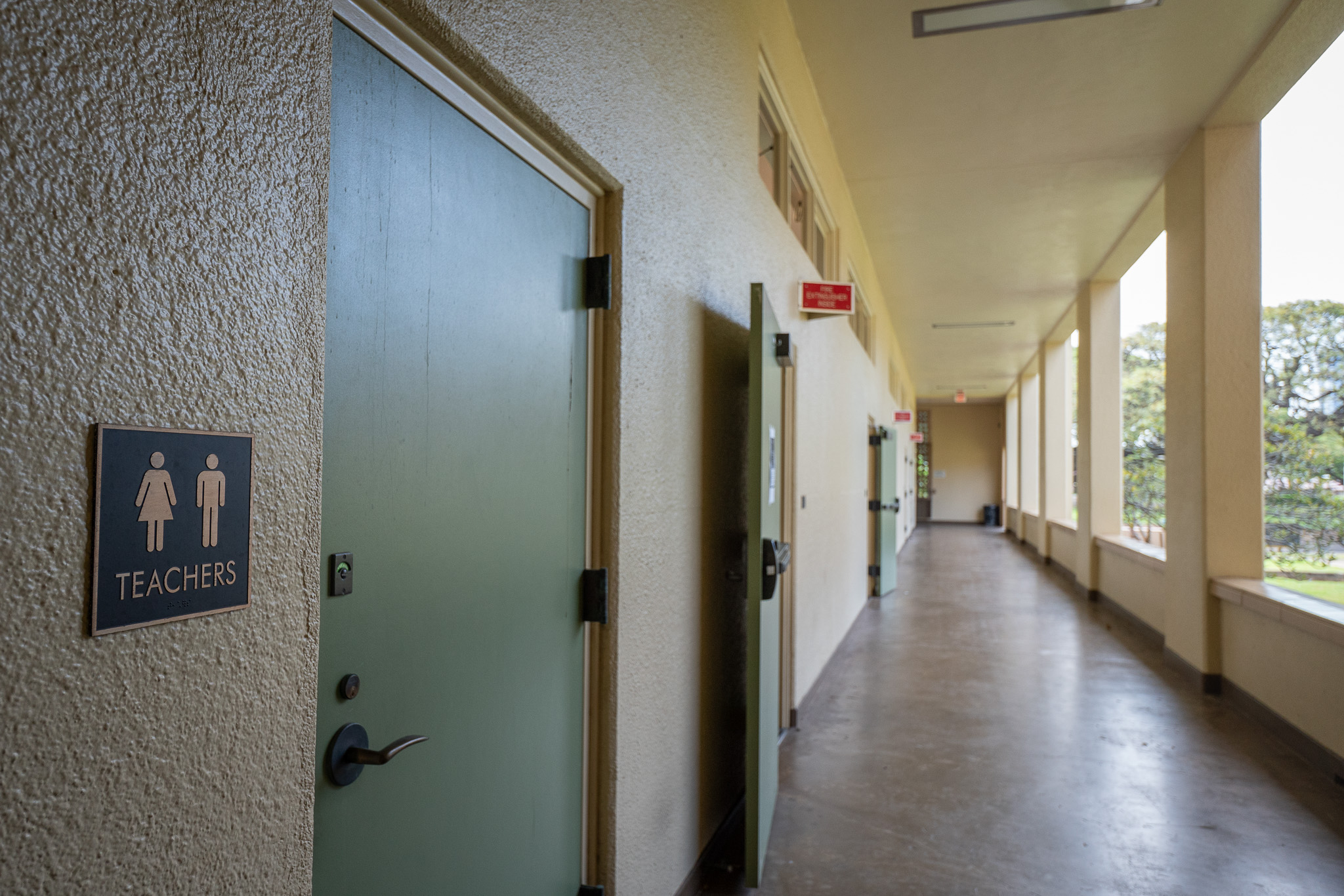
Who should handle school repairs and new construction also remains unsettled. Some campuses have endured deteriorating buildings, leaks and electrical problems. At Kalāheo High, some classrooms went without power for months and millipedes infested parts of the campus, frustrating families and lawmakers.
Multiple bills would have shifted larger construction projects and a statewide facilities database to the School Facilities Authority, which currently builds new campuses and preschool classrooms. Most efforts to expand the authority’s responsibilities stalled in the final days, as the Department of Education argued to keep the existing structure.
Even as some legislators criticized the backlog, department leaders said they have improved how they manage and spend construction funds. Gov. Josh Green has until June 30 to identify potential vetoes and until July 15 to sign or reject bills.
Hawaii teacher pay raises and protections
The session began about a month after a parent assaulted Moanalua High School’s assistant athletic director following a basketball game. Video of the attack spread widely, spurring calls for stronger safeguards for school employees and referees.
Similar safety proposals have surfaced since 2022, but the viral nature of the assault appeared to galvanize lawmakers, according to longtime advocate Lindsay Chambers, a former education department staffer.
House Bill 1888, which is on the governor’s desk, would require the Department of Education to formally investigate reported harassment and notify law enforcement. Employees seeking a temporary restraining order would receive paid leave and assistance from the Attorney General’s Office. The bill also elevates harassment of educational workers, including sports officials, from a petty misdemeanor to a misdemeanor, which can carry up to one year in jail and a $2,000 fine.
While educators and unions broadly supported the measure, some parents warned it could chill advocacy. In written testimony, parent Julianne King said the heightened penalties might be used to silence families, particularly those of students with special needs.
The teachers’ union also backed House Bill 1890, intended to guarantee annual salary step increases, subject to collective bargaining. Lawmakers and union leaders expect the raises to be about 3% for most teachers starting next year, with implementation tied to contract talks. Educators generally are not currently guaranteed annual step raises and have at times gone without increases during economic downturns.
This school year, the starting salary for a licensed teacher was $53,390. While vacancy numbers have improved, the state has leaned more on unlicensed educators to cover classes. Rep. Justin Woodson, who introduced HB 1890, said the measure aims to strengthen the pipeline into teaching. The increases would apply to educators with satisfactory evaluations, except those already at the top of the pay scale. Funding must still be appropriated, and the Hawaiʻi State Teachers Association expects automatic raises to take effect in 2027 during the next contract cycle.
Reading supports and bus services
Just over half of Hawaiʻi students scored proficient in reading on state assessments last year.
House Bill 1891 requires schools to use screening tools that can identify students who may be dyslexic and to provide teacher training to support struggling readers. With its passage, Hawaiʻi becomes the final state with a dyslexia law, said David Sun-Miyashiro of HawaiʻiKidsCAN. He said the goal is to ground instruction in science and ensure students get the support needed to catch up.
Lawmakers also addressed student transportation amid a longstanding shortage of qualified bus drivers. A bill from Rep. Trish La Chica allows the education department to reassign routes between contractors when companies repeatedly fail to provide service.
In summer 2024, the state shifted routes from Ground Transport Inc. to Roberts Hawaiʻi after Ground Transport said it could not cover nearly 150 routes shortly before school began. The new measure is intended to reduce major disruptions, though La Chica noted providers still struggle to meet demand.
According to the department, bus companies covered just under 60% of contracted routes last year. This year coverage improved to 90%, though 35 routes remain inactive. Superintendent Keith Hayashi cautioned in written testimony that increased penalties could deter companies from bidding in a tight labor market where all providers face driver shortages.
Unresolved facilities oversight
Lawmakers have for years questioned whether the department moves too slowly on facilities funding and lacks clear systems to track and communicate the status of large projects.
The education department currently has nearly $1.5 billion in unspent funds for campus repairs and construction, with about $610 million encumbered in contracts.
Several proposals sought to move projects from the department to the School Facilities Authority, and another would have funded the authority to hire private developers to build charter school campuses. None passed.
Department leaders argued they should retain responsibility for maintenance and repairs and pointed to progress in deploying capital funds. In 2025 and 2026, they requested to lapse about $41 million, a major improvement from the plan to forfeit $465 million two years ago.
Rep. Woodson credited the department’s recent progress and said it is premature to make sweeping changes to facilities management. “Those are big changes,” he said. “It’s too early for those types of discussions, I think, to materialize into policy.”