
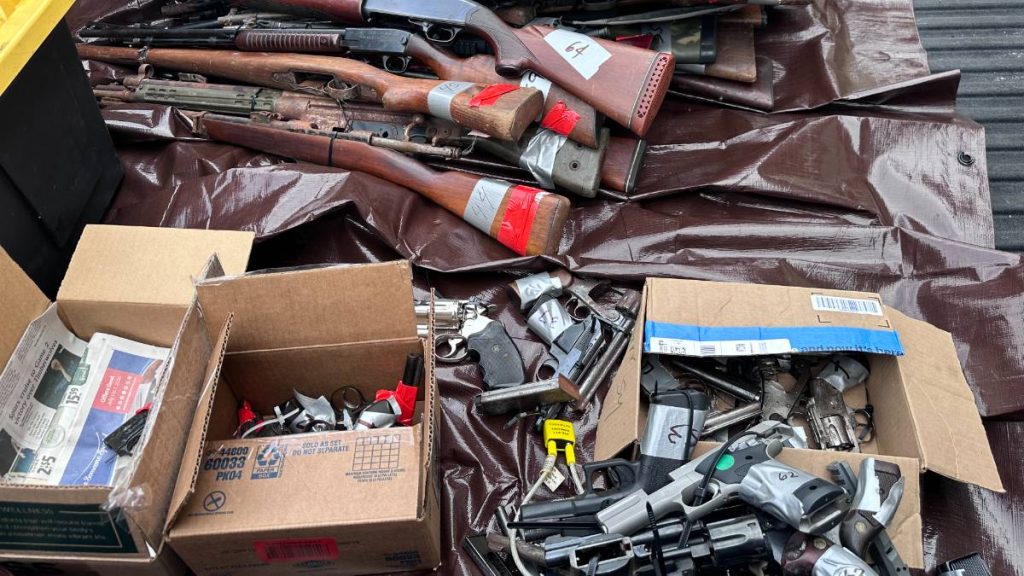
The Hilo gun buyback drew a strong response on July 18, with 149 firearms surrendered at the Hilo Police Station, according to participating agencies.
The event was organized by the Hawaiʻi Police Department in partnership with the Hawaiʻi Department of Law Enforcement, the Hawaiʻi Department of the Attorney General and the Hawaiʻi County Office of the Prosecuting Attorney.
Hilo gun buyback incentives
Participants received Foodland gift cards in exchange for relinquishing firearms voluntarily.
- $200 Foodland gift card for automatic firearms of any type, semi-automatic rifles and ghost guns.
- $100 Foodland gift card for handguns, rifles, shotguns, bump stocks and Glock switches.
Among the items turned in were eight assault-style rifles and nine privately made firearms, commonly known as ghost guns.
“Every firearm voluntarily turned in today represents one less opportunity for a tragedy to occur,” said Hawaiʻi Island Police Chief Reed Mahuna in a state release. He noted the remembrance of Officer Bronson Kaliloa, killed eight years ago during a traffic stop, as a reminder of the risks when firearms are in the wrong hands.
What happens to turned-in firearms
- Serial numbers are checked, and the last-known registered owner is notified by mail.
- Firearms are stored in a secure location until disposal.
- Firearms are destroyed according to U.S. Bureau of Alcohol, Tobacco, Firearms and Explosives specifications.
- Intake, storage and destruction are monitored by the Hawaiʻi Department of Law Enforcement Internal Affairs Unit to prevent loss or theft.
Police thanked community members who participated. “Every unwanted firearm safely removed from our community helps reduce risk, prevent violence and makes Hawaiʻi Island a safer place for our residents and our officers,” Mahuna said.
Officials said the buyback is part of statewide efforts under Gov. Josh Green’s administration to reduce gun violence. Since buyback events began at the end of 2024, more than 2,100 guns have been turned over to the state Department of Law Enforcement.
Authorities emphasized that secure storage and the voluntary surrender of unwanted firearms help prevent injuries and deaths. Unsecured guns can be stolen and used in crimes, accessed by children or contribute to suicides. Programs like this provide a safe, anonymous way to dispose of firearms no longer wanted or needed.
“These unwanted guns will never again be used. They will never again pose any type of threat to a loved one or have an opportunity to be used in a crime,” said Hawaiʻi Department of Law Enforcement Director Jared Redulla. “Every weapon turned in counts.”
The Hilo gun buyback operated as an amnesty program. No questions were asked, and no identification was required from those dropping off firearms. Licensed gun dealers and active or retired law enforcement officers were not eligible to participate. Officials added that no firearms are sold or kept for personal use.
Authorities said similar efforts to prevent violence and support safer communities are also underway, including initiatives like the Puna ʻŌpio Hub in East Hawaiʻi.