
Big Island residents turned out Monday to offer ideas for the Banyan Drive redevelopment, envisioning a community-focused future for Hilo’s aging hotel district as a new state agency takes shape to guide the effort.
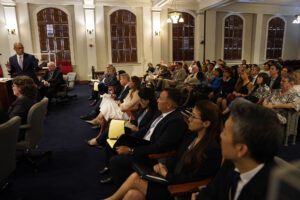
Attendees filled a warm meeting room near a Hilo park, jotting suggestions like walking paths, open shoreline access, family gathering spaces and putting culture and history first. The peninsula, once busy with bars, hotels and restaurants, has fallen into disrepair, and the state is now a step closer to reviving Hilo’s primary visitor hub with guidance from the community.
Longtime resident George Applegate recalled the area’s boom years and its current decline, and said he wants tourism that preserves Hilo’s old-school character. Honolulu can keep Waikīkī, he said, while Banyan Drive should deliver development that benefits local families.
The state controls the land beneath the hotels as ceded lands managed by the Department of Land and Natural Resources. Lawmakers have said DLNR’s conservation mission often conflicts with economic development, slowing discussions and delaying action.
That is set to change. In July, Gov. Josh Green signed Senate Bill 2001 into law as Act 206, creating the Banyan Drive-Makaokū community development district and an agency within the Hawaiʻi Community Development Authority to steer planning and investment.
The new agency’s board will include the chair of the county’s Banyan Drive Hawaiʻi Redevelopment Agency, a local resident, a small business or nonprofit owner and a lineal descendant of the ahupuaʻa.
The state budget also earmarks $14 million to demolish the derelict Country Club Condominiums, a frequent source of police calls in recent years. A separate proposal to acquire the lease for the Grand Naniloa Golf Course, viewed by many as central to the area’s overhaul, did not pass.
Keeping Up The Pace on Banyan Drive redevelopment
Rep. Sue Keohokapu-Lee Loy, who has pushed for Banyan Drive’s revival since serving on the Hawaiʻi County Council, said the new law marks a breakthrough after earlier attempts stalled. Her 2025 bill would have transferred lands from DLNR to HCDA, which DLNR opposed as premature and a threat to the board’s authority.
Act 206 removed the land-transfer language. With a community-led board under HCDA and collaboration with DLNR, Keohokapu-Lee Loy said a transfer is unnecessary. She described the goal as a careful, community-centered redevelopment, and called Monday’s HCDA open house a first step.
Over two and a half hours, residents reviewed poster boards detailing Banyan Drive’s past and present, spoke with HCDA representatives and completed surveys to share priorities. Many comments focused on more public access, places for gathering and blending economic growth with Native Hawaiian culture.
Ideas included restoring sacred sites such as a former heiau, creating a community center, relocating some hotels to open shoreline access, preserving the 1960 tsunami clock and repairing the Coconut Island bridge.
Hawaiʻi Island resident John Kahiapo said he was encouraged by the range of concepts and emphasized the need for sustained community involvement.
Monday’s open house is the first of several opportunities for public input as the state develops a master plan for Banyan Drive. Officials expect to complete the plan by mid-2027.
As the state invests in long-term planning and infrastructure, residents are also watching other policy debates at the Legislature, including how facilities issues linger even as Hawaii teacher pay raises advance.
Additional information about the Department of Land and Natural Resources, which manages the ceded lands under Banyan Drive, is available from the state DLNR. Gov. Josh Green’s office also provides updates on enacted legislation such as Act 206 on the Office of the Governor website.