
Hawaii child welfare is confronting a turbulent stretch after the sudden retirement of Department of Human Services Director Ryan Yamane last week, compounding long-running staffing gaps and uncertainty around reforms that lawmakers have tried to advance.
Yamane, a former social worker who led DHS for nearly two years, assumed direct oversight of the Child Welfare Services branch last summer following sharply critical findings from the Mālama ʻOhana Working Group and the Hawaiʻi State Auditor. During his tenure the department launched unannounced, after-hours visits to foster homes to add safeguards for foster keiki and pursued changes to foster home licensing. It remains unclear how much progress those efforts achieved or their current status.
Yamane announced his retirement effective immediately on Tuesday while the state Attorney General’s Office continues an inquiry into a 2022 payment of $35,000 to an unnamed state lawmaker. The AG is also reviewing pandemic-era spending that sent millions to a kidney nonprofit, and Yamane was reportedly questioned by investigators. His role, if any, is unclear.
State Sen. Joy San Buenaventura, who chairs the Senate Health and Human Services Committee, said Yamane had been a key figure in the child welfare system. She previously considered proposing a commission to oversee the program and push for improvements but held off to allow Yamane time to act. She now says DHS needs to fill top management roles and accelerate recruitment of front-line staff. “We need full employment for our social workers,” she said, adding that support for staff is essential so cases are handled fairly and removals occur only when necessary.
A tangle of troubles in Hawaii child welfare
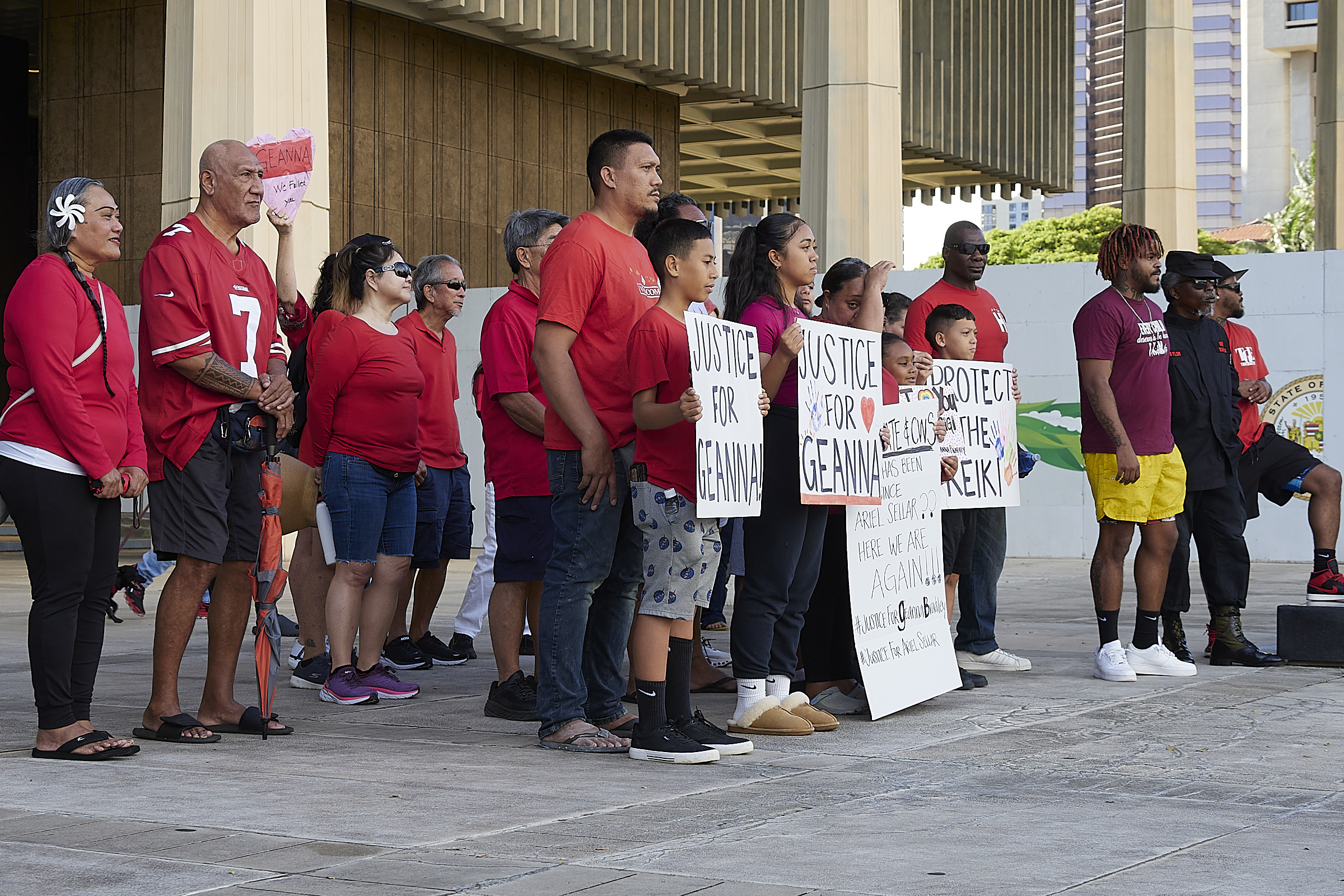
Concerns about the child welfare system intensified after 6-year-old Isabella Kalua disappeared from her Waimānalo home in 2021. Her adoptive parents were later charged with murder, although her body has not been found. The outcry helped spur creation of the Mālama ʻOhana Working Group, which in 2024 issued a critical report urging more preventive services for families at risk so fewer children would be removed from their homes.
Also in 2024, the state auditor detailed prolonged delays in licensing hānai or blood relatives serving as foster families, in some cases for years, leaving children with caregivers who had not been fully vetted. At the same time DHS has struggled for years to fill Child Welfare Services vacancies, with openings among investigators and caseworkers at times reaching 40%.
Leadership churn has added to the strain. There is no permanent replacement for longtime administrator Daisy Hartsfield, who oversaw the branch as social services division administrator until her Oct. 1 resignation. She was later appointed to represent Waipahu in the state House. The assistant social services administrator post has been filled by temporary appointees since before Hartsfield’s departure, and two top CWS leaders, Branch Administrator Elladine Olevao and Assistant Administrator Tonia Mahi, have told colleagues they plan to retire. Staff said Mahi’s exit is set for June 30. DHS said both remain on the job and declined to discuss personnel matters, adding that CWS continues daily work to serve Hawaiʻi’s most vulnerable keiki.
DHS said the social services division administrator and assistant administrator roles are temporarily filled by two experienced professionals under the direct oversight of Deputy Director Trista Speer, pending permanent hires. Gov. Josh Green named Joseph Campos II as acting DHS director after Yamane’s departure. DHS managers declined an interview request but said executive leadership remains aligned and focused on stability during the transition.
Confusion and concern over staffing
Public data show CWS had an overall vacancy rate of about 30% in early 2025, roughly unchanged from a year earlier. The vacancy rate for caseworkers was 39%, and 46% of caseworker aide positions were open.
Hartsfield, now serving in the House, said recruiting and retention require immediate attention. “Long term vacancies is concerning in any program because it impacts the capacity to provide services to the community,” she wrote, adding that stress, low morale and burnout can lead to resignations. She said leadership and management are key to solving the problem and noted that Acting Director Campos held a virtual meeting with DHS staff, calling it a good first step. San Buenaventura echoed the urgency, warning that unfilled positions make it easy to cite stress as a reason for failures.
Initiatives with promise for Hawaii child welfare
Several efforts aimed at strengthening CWS are in motion. Lawmakers last year set aside $6 million for incentives to reward high performers handling difficult caseloads and pursuing extra training, and also approved pay differentials to attract caseworkers and investigators. Hartsfield said those steps helped fill some positions but did not retain workers as hoped. Because not all CWS employees receive differentials, she suggested extending the extra pay to all positions in the branch could still help address vacancies.
Separately, Yamane launched the Kākoʻo Program last spring to conduct unannounced wellness checks of foster children by staff volunteers during evenings and weekends, with offers of additional services to foster families as needed. While current and former staff said the program was recently paused, DHS said it has not been discontinued and is being evaluated for enhancements in its next phase.
Yamane also said last spring that DHS planned to require training for families seeking to adopt children from the CWS system. DHS already trains foster families prior to licensing and offers optional pre- and post-adoption training. The department said the mandatory adoption training has not yet launched, and CWS is evaluating ways to ensure families receive appropriate training before adoption and that support continues after finalization.
This year lawmakers advanced outside-the-agency fixes. Senate Bill 3204 would create a two-year Family Resilience Pilot Program within the Office of Wellness and Resilience to support families at risk for CWS involvement, a recommendation from the Mālama ʻOhana report. The measure would provide $600,000 to train and hire five peer support resource navigators to guide up to 80 families toward services such as parenting classes that can help keep households intact. House Bill 1801 would allocate $200,000 to train CWS staff on domestic violence dynamics and provide expert consultation for related cases.