
Hawaii e-bike regulations are poised to tighten as lawmakers advance a bill that would require helmets for anyone under 18, bar wheelies and other stunts on public streets, and add age limits for certain models.
Honolulu Emergency Services Department Director Jim Ireland said paramedics began seeing a steady rise in serious injuries from electric bikes and scooters about three years ago, many involving children. He described the calls as emotionally taxing for first responders.
To raise awareness, EMS started issuing news releases about significant e-bike and scooter injuries. Ireland said the public took notice, but the incidents kept climbing.
For a second straight year, lawmakers passed a bill intended to curb dangerous riding. Gov. Josh Green vetoed a similar measure last year after the Attorney General’s Office warned it did not clearly exempt certain vehicles, including electric cars. State Rep. Darius Kila said House Bill 2021 addresses those concerns by defining e-bikes and other electric vehicles, barring certain high-speed devices from public roads and bike lanes, setting age restrictions, and requiring helmets for riders under 18. The governor has until June 30 to signal any veto intentions.
Some provisions mirror Honolulu rules adopted in 2025 that mandate helmets for minors, prohibit risky maneuvers such as wheelies, and cap e-bike motors at 750 watts. “There has to be compliance,” Kila said.
Hawaii e-bike regulations respond to rising injuries
State Department of Health data shows e-bike injuries more than doubled statewide from 106 in 2022 to 244 in 2025. Honolulu EMS recorded 110 e-bike-related injuries in 2023 and 181 in 2025, with 71 so far this year. About one-third of last year’s injuries involved minors, and more than half of those injured were not wearing helmets.
While EMS does not track fatalities and the Health Department does not compile e-bike death data, several deadly crashes have drawn attention. In 2025, a 7-year-old girl died after an e-bike crash in ʻEwa Beach, and later that year a 15-year-old was killed while riding an e-bike in the same area.
Ireland said speed is a key risk factor. Standard e-bikes can reach up to 28 mph, while some electric motorcycles and dirt bikes can travel much faster.
HB 2021 defines an e-bike as a bicycle with operable pedals and an electric motor no greater than 750 watts, and it adopts a three-class system. Class 1 provides pedal-assist up to 20 mph. Class 2 allows a throttle without pedaling up to 20 mph. Class 3 includes a speedometer and can reach 28 mph.
Eduardo Hernandez, advocacy director for the Hawaiʻi Bicycling League, said the definitions distinguish e-bikes from faster devices that pose greater crash risks. He noted roughly 40 states use similar classifications. Under the bill, “high-speed electric devices” have motors over 750 watts and can exceed 28 mph.
High-powered electric dirt bikes, including models like the one that struck and killed Honolulu pastor Alex Michel in 2021 while he was jogging on Fort Weaver Road in ʻEwa Beach, would be banned from public roads and sidewalks under the proposal.
The measure would also keep mopeds and electric motorcycles out of bike lanes. All classes of e-bikes could be used on sidewalks at speeds below 10 mph. The bill bans reckless riding, including standing or kneeling on seats and popping wheelies, restricts riders under 16 from using Class 2 or 3 e-bikes unless directly supervised by an adult, and mandates helmets for e-bike riders under 18.
Providing clarity on e-bikes
Hernandez said the bill should prevent people from conflating e-bikes with more dangerous vehicles. “It will allow e-bikes to have their rightful space in the transportation space, which is as a subset of a bicycle,” he said.
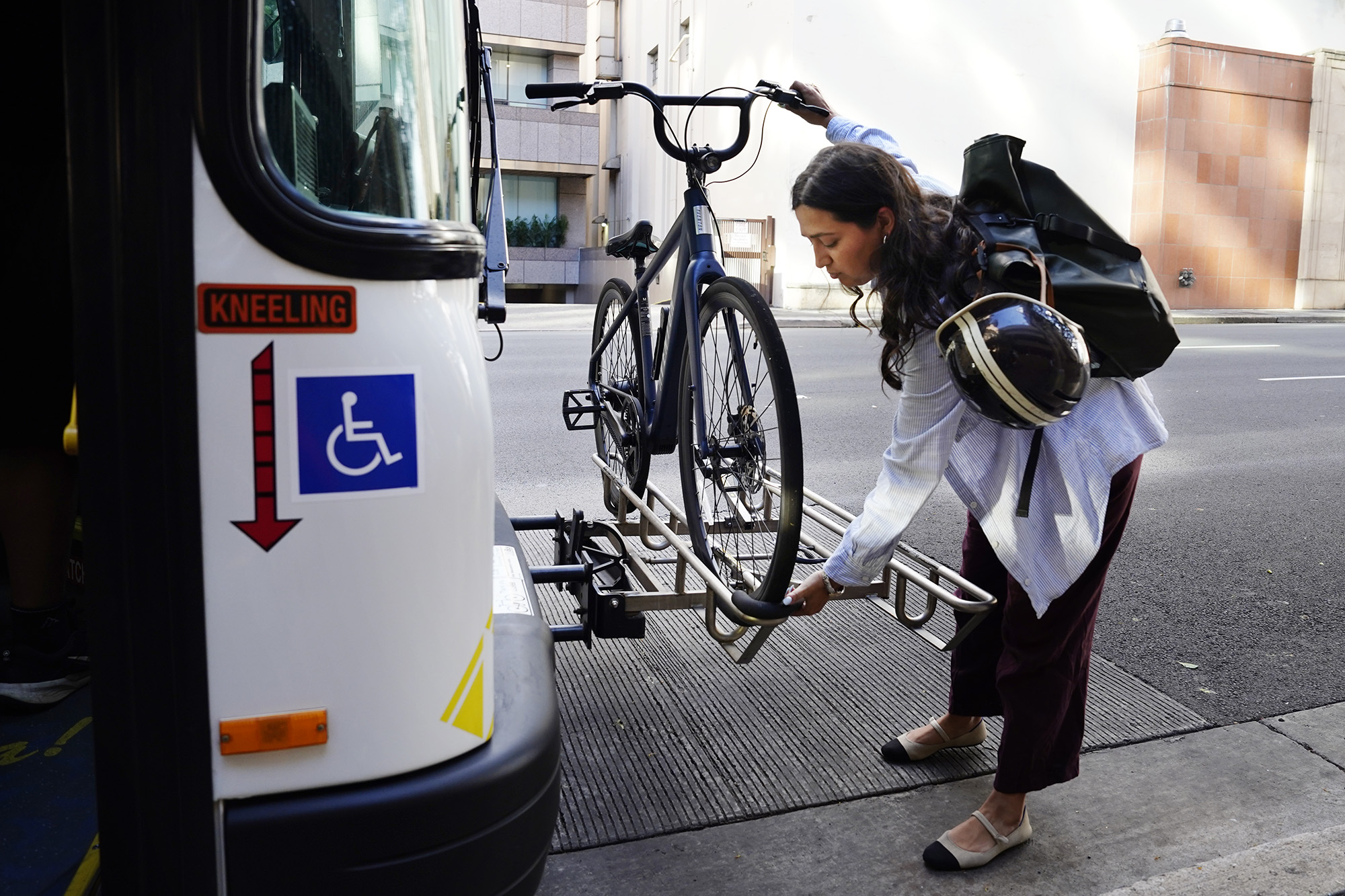
Hawaiʻi Bicycling League President Samantha Lara relies on an electric cargo bike capable of 20 mph and designed for two riders. She sold her car in 2023 and now uses the bike to commute from Waikīkī to Kāneʻohe, take her 15-year-old daughter to school, and run errands. She hopes the legislation clears up confusion about what is allowed, especially around bike-lane use. Lara does not support the age restrictions, arguing e-bikes can be a safe option for youth when used responsibly, but she welcomed the proposal to keep mopeds out of bike lanes.
“Bikes need their own space, first and foremost,” she said, adding that more driver education is needed.
Ireland said he understands why e-bikes are popular. They are relatively affordable, environmentally friendly, and useful for those not ready to invest in a car. He urged riders to focus on safety.