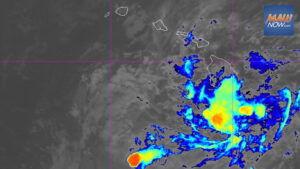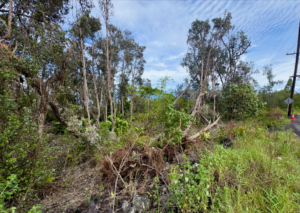

As Hawaiʻi recovers from Hurricane Lala and forecasters warn of a future with stronger storms, Hawaii hurricane shelters are unlikely to accommodate or protect everyone who would need them in a direct strike.
There are not enough designated sites to meet demand in a very strong storm, and county officials have not clarified whether most available facilities can withstand even a weak hurricane.
“Those are the questions that I think somebody needs to answer,” said Rep. Kim Coco Iwamoto, who represents Ala Moana and Kakaʻako. “Every day or every year that we choose not to build a hurricane shelter, we’re saying, ‘We’ll take our chances.’”
County emergency managers were asked to identify which facilities are built to specific wind standards. Hawaiʻi island officials replied that two facilities are rated for Category 3 winds, the Hilo High School Gym and the Robert N. Herkes Gymnasium and Shelter in Pāhala, and that no other fortification projects are underway.
Honolulu, Maui and Kauaʻi counties said they were not tracking or could not readily provide wind-resilience details for their sites. Oʻahu’s emergency manager told another outlet earlier this year that 20 of the island’s 25 shelter locations were only upgraded to a Category 1 standard, the lowest on the five-tier scale.
The Hawaiʻi Emergency Management Agency said it could not provide a statewide breakdown of shelter strength, noting counties are responsible for that information. Eight years after an investigation found many sites could not endure even a moderate hurricane, officials have not outlined what, if anything, has changed.
Rep. Diamond Garcia, who represents West Oʻahu, said he was surprised the information was not readily available, especially after Hurricane Lala nearly hit the island. “That should be made public,” he said.
The information gap leaves residents guessing in a storm. Many older single-wall homes remain vulnerable to Category 2 winds above 96 mph that can peel roofs and shatter windows, while residents in newer towers may not know whether to stay or go.
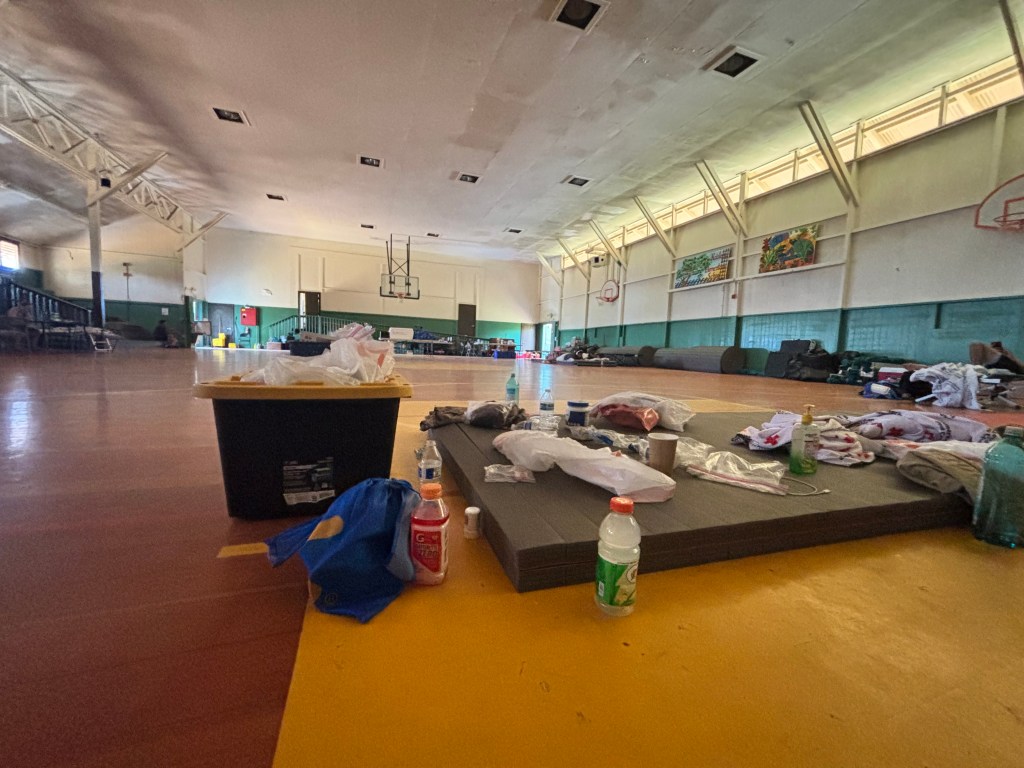
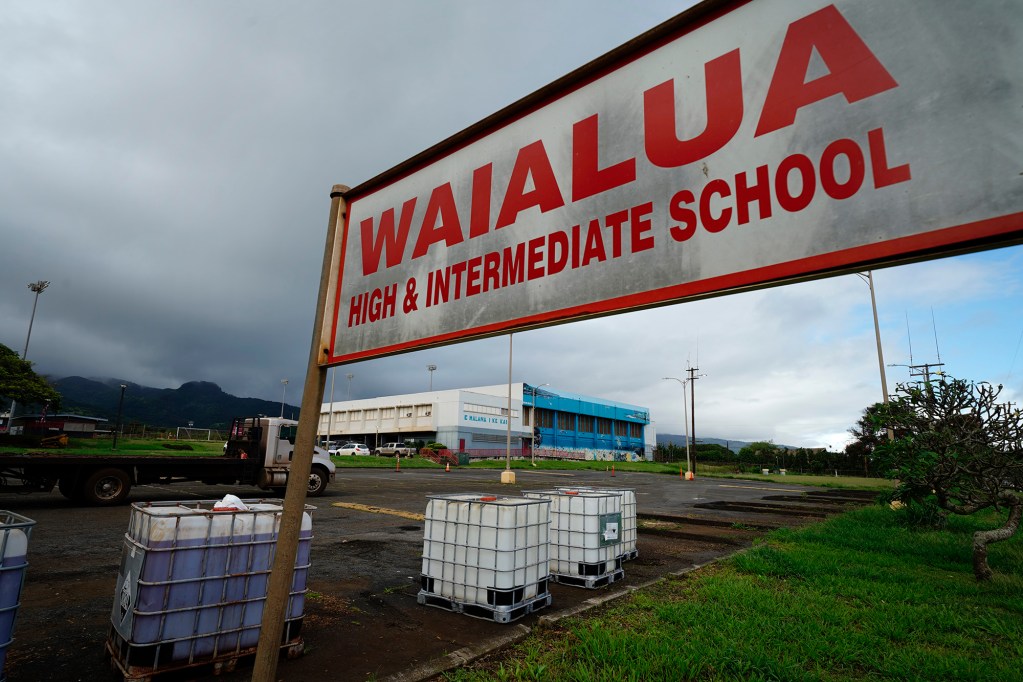
Recent Kona low floods showed that some facilities are also at risk. On Oʻahu’s North Shore, Waialua High and Intermediate School flooded and nearly 200 people were moved.
On Hawaiʻi island, flooding at a Nāʻālehu community center pushed evacuees to a nearby school gym.
Coordination remains a concern. A preparedness plan released last year said the Department of Education lacks formal procedures for communicating with schools about their shelter roles.
The agency did not respond to questions.
Honolulu estimates capacity for only about 100,000 people in its facilities, roughly half of what would be needed during a Category 5 event. In 2018, a state official said it could take centuries to assess and retrofit the necessary sites statewide.
He did not respond to a recent request for comment.
Hawaii hurricane shelters: Priorities declared, then little clarity
Most hurricanes that threaten the islands develop off Mexico and Central America, then typically weaken over cooler Pacific waters and strong trades, according to University of Hawaiʻi Mānoa climatologist Pao-Shin Chu.
Hawaiʻi’s last direct landfall was Category 4 Hurricane Iniki in 1992, which caused several deaths and an estimated $3 billion in damage on Kauaʻi. Category 5 Hurricane Lane in 2018 came close, dropping a record 58 inches of rain on Hawaiʻi island.
With warming oceans, Chu said the chance of stronger systems reaching Hawaiʻi is rising.
The state listed mass evacuation and sheltering for more than half a million people as a priority in a January 2025 report. Whether there has been progress is unclear, and the state emergency agency did not respond to multiple requests for a status update.
A resolution adopted this year asks HI-EMA to identify hurricane-capable shelters and develop a plan to expand capacity. The agency did not say how far that effort has advanced.
On Oʻahu, nearly four dozen listed locations are labeled as “refuge areas,” not true hurricane evacuation shelters. The city says they may be safer than flood, surge or older single-wall homes, but do not meet state hurricane shelter guidelines.
The site does not specify those guidelines.
Since 2020, Oʻahu’s shelter count has fallen by two-thirds after inspections found many sites failed to meet minimum standards. Kailua once had eight shelters.
Now it has none. On the North Shore, Brigham Young University was removed from the list due to flood risk.
Honolulu’s Department of Emergency Management said hurricane refuge areas are a last resort for people without safer options. The city publishes criteria to help residents judge whether their homes are safe to shelter in place.
Sheltering at home
Preparedness also means making homes safer. Videos after Lala showed roofs ripped from houses on Hawaiʻi island and in Kalihi on Oʻahu.
State building codes since 2010 require new homes to meet Category 3 wind loads, but large numbers of older wood-frame and single-wall houses do not meet that threshold.
Rep. Tina Grandinetti, who represents Kāhala and Kaimukī, said much of her district predates modern codes and that one failed roof can endanger neighbors as debris becomes windborne. Honolulu notes that single-wall wood homes built before 1995 and not retrofitted face higher risk.

Rep. Iwamoto said residents in newer high-rises may be safer in interior concrete corridors. “I would go to the condos because their interior hallways are completely protected by concrete,” she said, encouraging people to seek shelter with friends in such buildings when possible.
In June, the state emergency agency received $4 million from the new Green Fee to pilot grants that harden roofs and improve window protection, starting with low-income homeowners and kūpuna.
The agency did not provide an update on the program’s status.
Other resilience proposals have stalled. House Bill 2526 would create a nonrefundable tax credit for wind retrofits or building a home hurricane shelter.
The House version did not advance, and the Senate version stopped in Ways and Means. Garcia, a sponsor, said that with no government capacity to house most residents in a Category 5 scenario, people should be empowered to upgrade their homes.
Another measure, Senate Bill 2972, would require new high-occupancy buildings permitted this year and beyond to withstand Category 5 winds. It also stalled in Ways and Means.
Chu warned that with ocean temperatures rising and another system already on the radar, Hawaiʻi should expect more powerful storms than Lala. “Once the hurricane passes, people forget about it,” he said.
“But don’t be off guard… We expect to see more in the future.”