
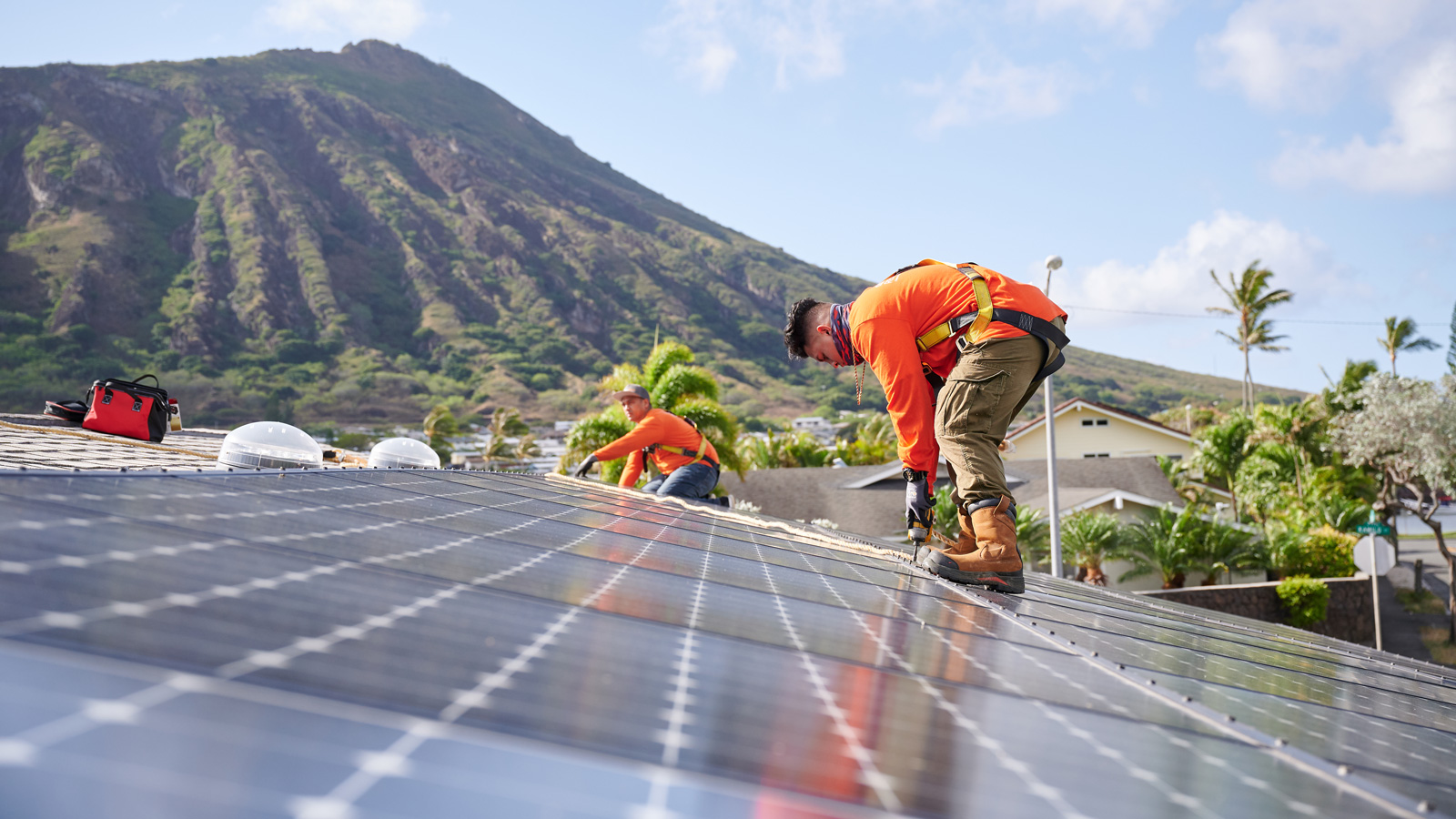
Hawaii solar tax credit cap set by lawmakers on the final day of session has thrown hundreds of commercial and industrial solar projects into doubt, upending plans for communities and businesses counting on clean energy savings.
In Pearl City, Waiau Gardens Kai B homeowners association president Larry Veray had lined up a private investor to pay for rooftop solar and battery storage across the townhome complex, with no upfront cost to residents. Under the proposal, residents who opted in would lock in a 20 percent reduction on their monthly electricity bills for 25 years. The deal unraveled after the Legislature imposed a $40 million annual ceiling on the state’s solar tax credit program, which typically pays out about $100 million each year, and made the cap retroactive to 2026.
Veray said the investor pulled out following the legislative move, leaving the 114-unit complex without the anticipated savings.
The solar industry is now urging a fix, including a potential special session, to address the retroactive element. Industry representatives argue the change undermines Hawaii’s statutory requirement that all electricity sold in the state come from renewable sources by 2045. Gov. Josh Green has signaled he intends to respond, although details have not been released.
Rocky Mould, executive director of the Hawaii State Energy Association, welcomed the governor’s pledge but warned the market needs clarity soon. He said companies and investors require assurance that projects initiated this year will receive the credits they relied on.
Hawaii solar tax credit cap and long-running incentive program
The Renewable Energy Technologies Income Tax Credit allows taxpayers to reduce their income taxes by 35 percent of a solar system’s cost. The program covers large systems at commercial and industrial sites such as shopping centers and warehouses, but not utility-scale solar farms selling power to Hawaiian Electric. For residences, the credit is capped at $5,000 per property.
State data show the solar credit is the largest of nine incentive programs aimed at spurring targeted activities. Since 2006, Hawaii taxpayers have covered $1.36 billion in solar credits, including more than $100 million in 2023, according to the Department of Taxation. By comparison, film and television production credits totaled $43.5 million.
Seeking to avoid raising income taxes this session, lawmakers capped the solar credit at $40 million annually through 2030, after which the incentive will be eliminated. The industry said the decision, particularly the cap’s retroactive application to 2026, blindsided companies and investors and will leave recently completed or contracted projects short of what they expected.
Mould said eight of the state’s largest solar companies had already queued up 265 commercial projects for 2026, backed by $436 million in private capital. Some projects are now being canceled, and advocates worry the fallout will spread. He noted those figures do not include the residential market.
The ripple effects reach critical community services. The Hawaii Primary Care Association, which represents 14 federally qualified health centers serving more than 160,000 patients annually on Oahu and the neighbor islands, had planned to install solar-plus-battery systems at five centers in 2026, including Waimānalo Health Center and Wahiawā Health on Oahu, working with Collective Energy Co. LLC. The association intended to expand the effort across its network but says the budget change has put the plan in jeopardy.
Beyond immediate project risks, the cap conflicts with a separate policy direction. In 2025, Gov. Green issued an executive order establishing a state policy to maximize distributed solar paired with batteries, aiming for dispatchable rooftop and parking-area generation on land-constrained Oahu by 2045, and facilitating at least 50,000 solar-plus-storage installations by then.
State energy officials say they are exploring ways to address the crisis. Hawaii State Energy Office Director Mark Glick said the administration is working on solutions, but it is too early to share specifics.