

The Hawaii teacher shortage is increasingly seen as more than a staffing gap. It signals a need for long-term, strategic workforce planning that looks beyond quick fixes and focuses on building and retaining talent for years to come.
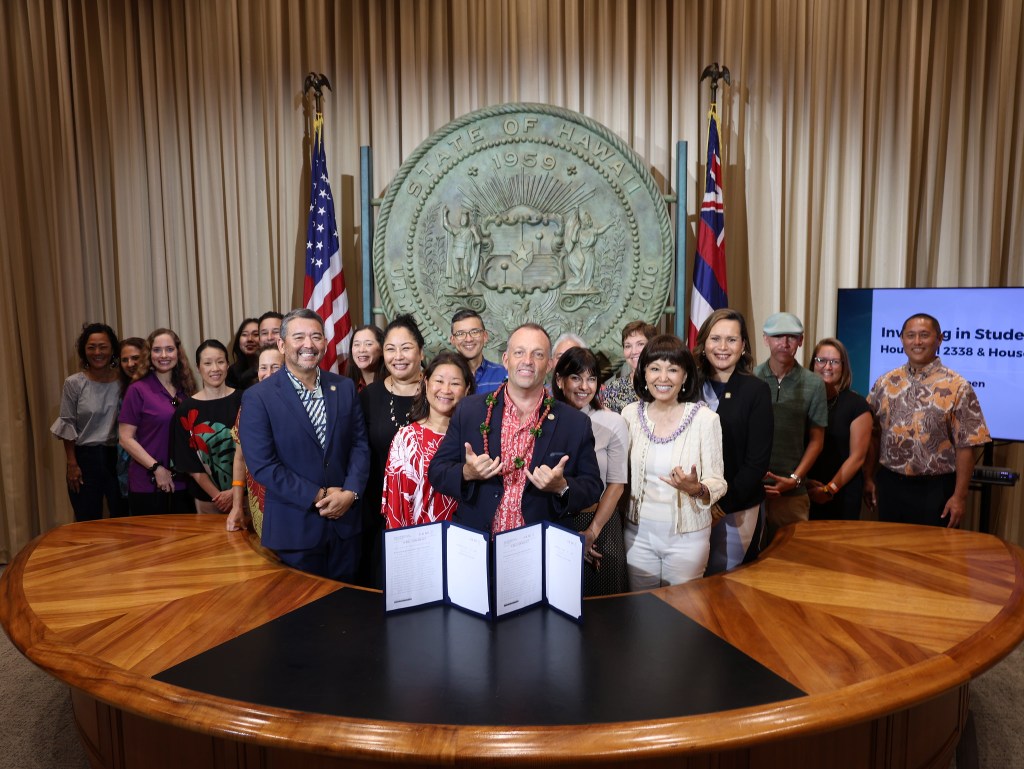
Gov. Josh Green recently signed two education measures intended to strengthen the educator workforce. One expands protections for teachers who face harassment. The other authorizes annual salary step increases through future collective bargaining agreements, pending legislative funding. State officials say both steps address immediate pressures on recruitment and retention.
Supporters note that these efforts matter, yet they also point to a broader opportunity to rethink how Hawaii develops, supports and keeps its educators. For years, conversations about vacancies have centered on near-term actions such as raising pay, enhancing recruitment, offering incentives, bolstering workplace protections and driving down unfilled positions.
Those actions are necessary and should continue. Still, they are largely responses after problems emerge. By the time classrooms are hard to staff and resignations accelerate, the deeper causes have typically been building for years.
The challenge now is to pair these downstream remedies with upstream planning. That means clarifying future talent needs, strengthening educator pipelines and improving long-range retention. Instead of asking only how to fill positions today, policymakers are urged to consider what the educator workforce should look like five, 10 and 15 years from now.
Key questions include how many teachers local preparation programs are producing, which factors most shape retention, why some leave within a few years while others spend an entire career in the classroom, and how to create stronger pathways for Hawaii residents to enter the profession.
In the private sector, this broader lens is often described as human capital management. Rather than simply administering personnel, the approach treats people as assets to be developed and supported, creating long-term value for the organization. Viewed this way, the Hawaii teacher shortage is not just a staffing issue. It is a signal to adopt a more deliberate, forward-looking approach to workforce planning.
Hawaii teacher shortage and Race to the Top
During the state’s Race to the Top initiative, education leaders emphasized great teachers, great leaders and great schools. That aspiration remains relevant and underscores how some of the work is unfinished.
The Department of Education is modernizing human resources systems and processes. Better technology can improve efficiency, provide stronger data and support smarter decisions. But technology alone is not a workforce strategy.
The opportunity is to use modernization as a springboard for broader change, including improved forecasting, talent development, retention strategies, succession planning and workforce analytics. A comprehensive approach extends to training and professional development, compensation and rewards, career advancement, leadership development and labor-management relationships, all aligned under a unified workforce strategy.
The new laws supporting the teacher workforce are meaningful steps forward. Educators need safe workplaces, professional support and fair compensation, and these reforms address pressing needs.
Technology alone is not a workforce strategy.
They should also be a reminder that while downstream actions tackle today’s issues, upstream human capital planning helps prevent them from arising in the first place.
The teacher shortage has become an inflection point for Hawaii. It is a chance to move from managing vacancies to cultivating talent, from reacting to shortfalls to preventing them, and from viewing employees as resources to viewing them as assets worthy of long-term investment.
This aligns with the unfinished aims of Race to the Top. Embracing a true human capital strategy would connect workforce planning, recruitment, training, compensation, leadership development, retention and labor relations around a shared goal: building the educator workforce Hawaii needs for the future.
If Hawaii makes that shift, the benefits could extend beyond classrooms to the state’s broader economic and social well-being.