
The first round of public feedback on an offshore LNG proposal tied to a $2 billion power project on Oahu is urging federal regulators to widen their review beyond the ocean infrastructure and consider the broader impacts of natural gas, including alternatives.
Commenters asked the Federal Energy Regulatory Commission to evaluate life-cycle emissions, potential renewable substitutions and whether the plan aligns with Hawaii’s clean energy targets, not just the offshore components that represent a smaller share of the overall project.
Accepting public comments is among the initial steps in FERC’s pre-review that must occur before JERA Co. can submit a formal application.
The review so far covers a new offshore terminal, a floating regasification unit and a pipeline, which together account for roughly one quarter of the project cost. FERC has stated the planned 500-megawatt, $1.5 billion generation facility does not fall under its jurisdiction.
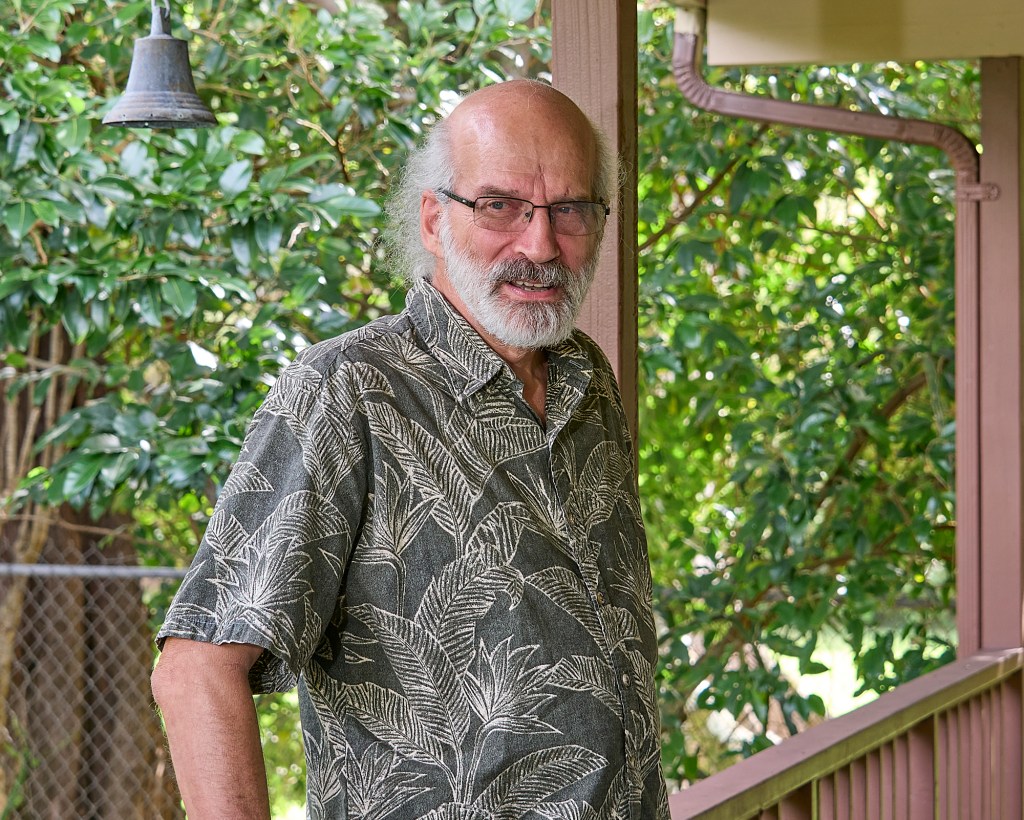
Henry Curtis, executive director of Life of the Land, was among the first to file a comment, arguing it defies common sense to split the analysis. He said such a limited scope might apply if new offshore infrastructure served an existing plant, but not in this case.
“Both parts must be included in the analysis,” Curtis said, calling for cumulative impact review that includes LNG life-cycle emissions and consideration of options like large-scale solar paired with batteries.
Natural gas is often described as cheaper and cleaner burning than the oil that currently fuels many Hawaii power plants. Critics counter that methane leakage can erase those climate advantages and question new fossil investments as state law requires all electricity sold in Hawaii to come from renewable sources by 2045.
While utility-scale solar, wind and battery projects are expanding, so-called firm power resources are still expected to play a role after 2045, especially on densely populated Oahu.
FERC announced two open houses on Oahu for public input: Aug. 3 at the University of Hawaiʻi–West Oʻahu’s Multi-Purpose Ballroom and Aug. 5 at the Neal Blaisdell Center’s Pīkake Ballroom. Comments are also being accepted through FERC’s online comment system.
JERA, participating under the name Longboard LNG, will be at the open houses. The company has posted project details and event information on its website and set up a telephone hotline at (808) 582-0299.
Kailua resident Erin Kelly, another early commenter, urged FERC to require an environmental impact statement that seriously analyzes whether reliability needs can be met with renewable energy and storage without building new fossil fuel import facilities.
Erik Montague, vice president of development for JERA Americas, pointed to FERC guidance noting the agency does not approve construction of electric generation facilities. He said FERC’s authority under the Natural Gas Act applies to the floating storage and regasification unit, mooring system, the pipeline and an onshore receiving facility.
“The proposed power generation facility at Campbell Industrial Park is not part of FERC’s review,” Montague said.
Costs and the offshore LNG proposal
JERA’s plan for a $2 billion, 500-megawatt plant on Oahu would mark a significant shift in the state’s energy landscape, setting up broader debates as outreach ramps up. Consumer cost is expected to be a central issue.
Separately, Hawaiian Electric has regulatory approval for a $1.1 billion, 250-megawatt upgrade at the Waiau power plant, which will start on oil and bio-diesel and transition to renewables by 2045. That project is projected to add about $3 to $5 per month to a typical residential bill, not including the higher fuel cost of bio-diesel compared to current oil.
JERA, which has a strategic partnership with Gov. Josh Green, says its proposal would be less expensive for ratepayers, though it has not yet filed specifics with the Hawaiʻi Public Utilities Commission.
The largest share of JERA’s cost, about $1.5 billion, is for fuel-flexible generators expected to run on natural gas until 2045, when state law would require renewable fuels such as bio-diesel or potentially hydrogen, which is supported by the Japanese government’s energy policy.
The remaining roughly $460 million would fund the offshore facilities and pipelines that regasify super-cooled LNG and deliver it to the planned plant site at Barber’s Point in Kalaeloa.
FERC emphasized it is in the early stages of pre-review. “To be clear, please note that this Project has not yet been approved or authorized,” the commission told stakeholders, adding that it will consider all comments received as part of its process.