
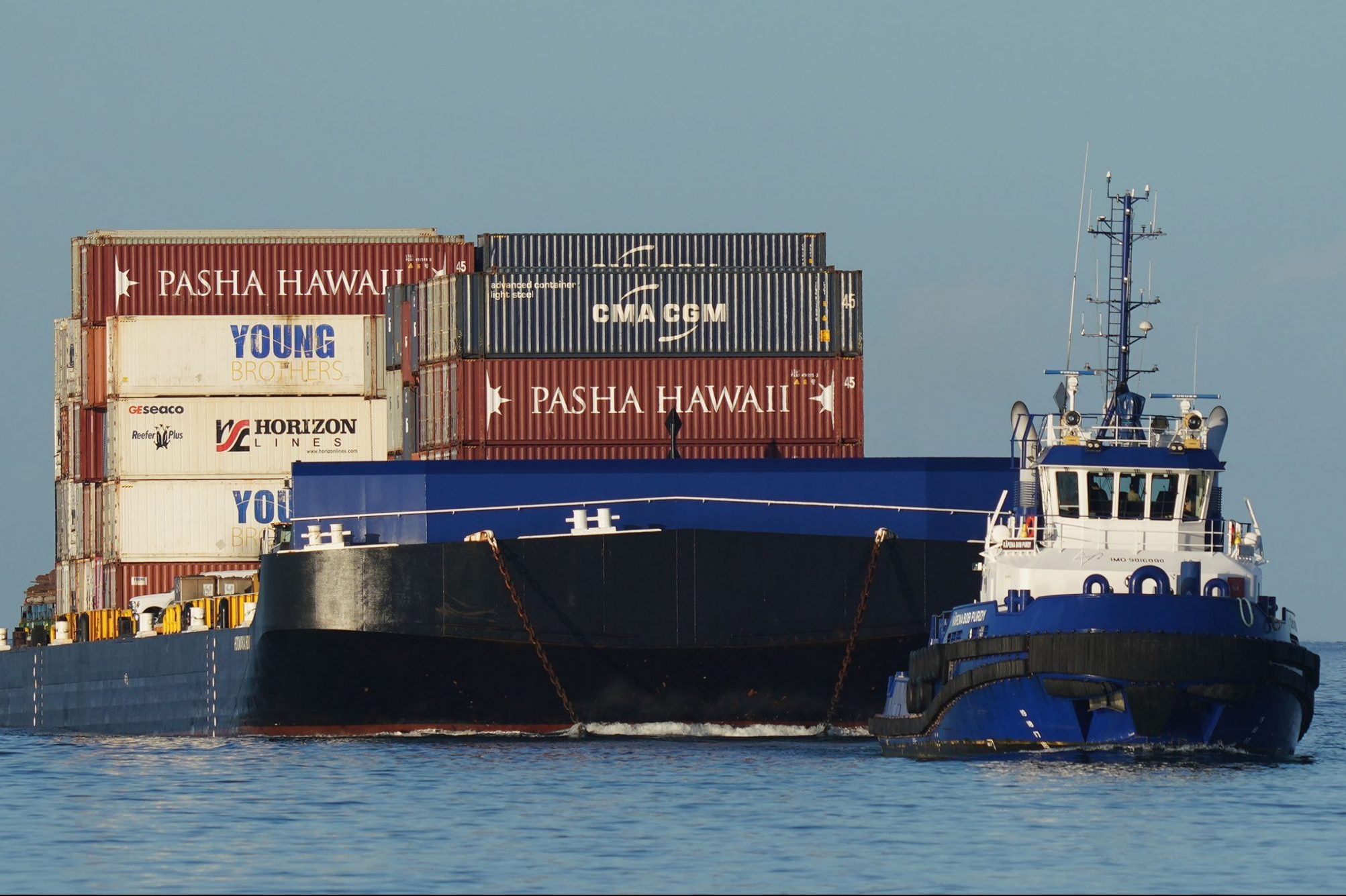
Gov. Josh Green has signed a law enabling a 3% Young Brothers rate increase on interisland freight starting July 1, the company announced. The change lands the same day state wharfage fees rise 3%, which could add to costs for businesses and consumers across the islands.
The adjustment marks Young Brothers’ second hike this year. The Public Utilities Commission approved a 25.75% increase that took effect Jan. 1. Under the new law, Senate Bill 2694, the carrier may implement automatic rate increases of up to 5% annually for the next three years.
State transportation officials have set the wharfage increase for July 1, aligning with the company’s new pricing and creating additional pressure on interisland commerce.
Young Brothers operates the state’s primary service for bulk cargo between Oʻahu, Hawaiʻi island, Kauaʻi, Maui, Molokaʻi and Lānaʻi, including large-volume shipments such as construction materials. The company is regulated by the Public Utilities Commission, which traditionally must approve rate changes. Young Brothers has argued the approval process is too slow, saying it has operated at a loss while awaiting decisions.
The company’s finances drew scrutiny after it diverted more than $26 million in state wharfage fees collected from customers in 2024 and 2025 to cover operating costs rather than remitting the money to the state, according to the Department of Transportation. With penalties and interest, officials say the total owed is now about $30 million.
Young Brothers rate increase draws pushback
In a customer notice, the shipper described SB 2694’s mechanism as a more timely, transparent and predictable framework for adjusting interisland rates. Critics counter that the measure skirts the regulatory process designed to oversee a monopoly service.
Pamela Tumpap, president of the Maui Chamber of Commerce, said the Legislature and governor effectively bypassed the PUC, noting most businesses and consumers have no realistic alternative to Young Brothers for interisland freight. She described the additional hikes as another burden on costs, even as a separate fuel-related adjustment mechanism already exists. The PUC previously rejected an across-the-board automatic rate proposal in 2024, she said.
When approving the 25.75% hike for this year, the PUC said no further increases would occur for two years. SB 2694 changes that timeline.
Green declined an interview, but senior adviser Will Kane said the law does not overrule the PUC. In a written statement, Kane said lawmakers acted within their authority to adjust agency responsibilities and to allow manageable increases with safeguards to evaluate outcomes over time.
Opposition to the automatic increase authority included the Hawaiʻi Island Chamber of Commerce, the Molokaʻi Chamber of Commerce, the Hawaiʻi Restaurant Association and the Hawaiʻi Food Industry Association. Lauren Zirbel, president of the food industry group, said members are surprised to see another 3% increase on top of January’s 25.75% and worry about the effect on food prices.
Company leaders have said that even with the 25.75% hike, rising costs and lower cargo volumes could leave Young Brothers about $6 million in the red in 2026.
The company is regulated by the Public Utilities Commission, which traditionally must approve rate changes.
Gov. Josh Green has signed a law enabling a 3% Young Brothers rate increase on interisland freight starting July 1, the company announced.
According to the Department of Transportation, with penalties and interest, officials say the total owed is now about $30 million.