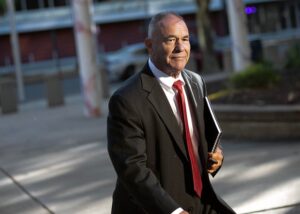

Mike Rogers debate plans drew fresh scrutiny after the Republican U.S. Senate candidate said he never agreed to participate in a televised forum that his Democratic opponent, Abdul El-Sayed, attended in Detroit.
On Tuesday, El-Sayed appeared live on Fox 2 Detroit for about an hour alongside an empty podium reserved for Rogers. The broadcast followed a same-day announcement from Rogers that he would not attend.
Rogers later reiterated in an interview with CBS News Detroit’s Heath Kalb that he had not committed to the event. He also criticized the setup, saying the moderator’s approach would have resulted in what he described as a two-on-one scenario.
El-Sayed, a Democrat seeking Michigan’s open U.S. Senate seat, used the solo appearance to press his case to voters and to call on Rogers to meet him on stage. The station proceeded with the program despite Rogers’s decision, maintaining an empty lectern at the candidate’s spot.
Mike Rogers debate dispute spills into televised forum
The back-and-forth highlighted growing tensions in the high-profile Michigan race. Rogers, a former congressman, argued that the conditions for the televised exchange were unfair and that he had not finalized any agreement to participate.
His campaign did not immediately provide alternative debate plans. El-Sayed’s hour-long appearance underscored the campaign’s push to engage voters through broadcast platforms in the Detroit media market.
The optics of an empty podium are a familiar tactic in political showdowns when one candidate declines or withdraws. The Michigan Senate contest is drawing national attention, with control of the chamber potentially at stake.
Debate negotiations often become flashpoints late in campaigns, as each side seeks favorable terms and broad exposure to voters. The format of televised forums on outlets like CBS News Detroit can become a central point of contention between rivals.