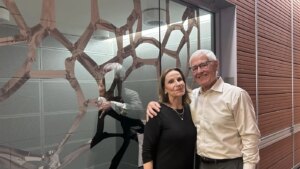

The mRNA pancreatic cancer vaccine is giving one patient a life she did not expect to have. At 72, retired accountant Donna Gustafson hikes, travels, lifts weights, and shares easy laughter with her husband, Ed, while showing no signs of the Stage II pancreatic cancer that once threatened her life.
“I have had 100% quality of life; I am back to where I was prior,” Gustafson says. Her husband quickly adds that she is in the best shape of her life and even a bit “sassier.”
mRNA pancreatic cancer vaccine and a pioneering patient
Seven years ago, Gustafson became the first person to receive a personalized mRNA vaccine for pancreatic cancer, a disease that strikes roughly 70,000 Americans each year and is notoriously hard to treat. Her vaccine was tailored from her tumor tissue to teach her immune cells to recognize mutated proteins on cancer cells and destroy them.
mRNA vaccines having a moment
It has been a pivotal year for cancer vaccines built on mRNA technology. Drugmakers reported Phase 3 results showing that an mRNA-based therapy for skin cancer, given with immunotherapy, cut the risk of recurrence or death by 42% over two years.
Similar strategies are in trials for lung, kidney, bladder, and brain cancers. Researchers say results have been mixed across studies, but some patients, like Gustafson, show striking responses.
Want the latest stories on the science of healthy living? Subscribe to NPR’s Health newsletter.
Gustafson, who divides her time between New Jersey and Florida, says she was not afraid to be first. Her three daughters helped her find and enroll in the trial.
“It was a no brainer,” she says, noting the poor odds pancreatic cancer patients face and her desire for any chance at hope.
Her treatment included surgery, chemotherapy, and nine doses of the vaccine as part of a 16-patient study. The vaccine generated strong immune responses in half of participants, and seven of those eight are alive today.
Compared with chemo, the vaccine was far easier to tolerate, the couple says. Chemotherapy required long infusions and came with “barbaric” after-effects, Ed recalls.
The vaccine shots, Donna says, caused no symptoms or side effects. “I was actually worried that maybe it was not helping.”
But the benefits appeared quickly. Surgeon-scientist Vinod Balachandran led the trial at Memorial Sloan Kettering Cancer Center in New York City, where a large lab team tracks immune responses and designs the individualized mRNA.
A research analyst’s chart of Gustafson’s immune cells showed lines that spiked and then held high, which Balachandran described as a 10,000-fold increase that persisted long after her last dose. “It just tells us that this response lasts,” he says.
Balachandran says the strength and durability of responses in half the patients changed his view of what is possible with this approach. If it can elicit such immunity in one of the toughest cancers, he says, it could unlock vaccines for a broader range of tumors.
Promising future
The field is at an inflection point for patients, clinicians, researchers, and investors. The National Cancer Institute is pursuing partnerships with industry to speed development of mRNA cancer vaccines.
Sloan Kettering plans to expand on-site production of personalized vaccines as part of that effort. Gustafson and her husband say the last seven years have felt like a gift.
“I saw two more grandchildren be born and grow, many birthdays, holidays and Christmases with my family,” she says. Together they have checked off bucket-list goals, from skydiving to summit hikes, and celebrated their 50th anniversary with hopes for many more.
“We’ve done so many things,” Ed says, before Donna gently finishes the thought, “…if we had not had this experience.”
“We live so much more for the day now,” Ed says, looking at his wife. Stories like Gustafson’s echo the comfort and connection found when patients receive innovative or unexpected forms of care.