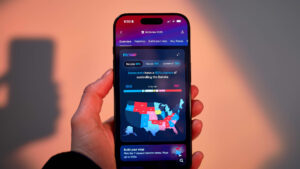
Prediction markets 2026 midterms reinforced the role of trading platforms in election forecasting on Tuesday, with markets signaling outcomes ahead of many media calls and in some cases before significant vote counts were reported.
Before the first polls closed at 6 p.m. ET, markets had Democrats favored to flip both chambers of Congress and narrowly projected at least 53 seats in the U.S. Senate, with a 54th considered a toss-up. As of early Wednesday, Democrats had secured 54 Senate seats, including victories in Iowa, which markets had rated as a 50-50 contest, and South Carolina, where Republicans were narrowly favored. Results were still outstanding in Mississippi and Alaska, where prediction markets placed Democrat Scott Colom and Mary Peltola at roughly 90% to win.
Prediction markets 2026 midterms and confident calls
Confident calls
Leading platforms actively posted race projections on X throughout the night, sometimes well ahead of major outlets. A spokesperson for Kalshi said the platform was comfortable calling races when a candidate’s odds exceeded 99% and activity on the opposing side had largely stopped. Polymarket said it called 10 key races a median 31 minutes before several national outlets. Its CEO said markets can often be hours ahead of television networks, arguing that real-time trading offers faster signals.
In contests where early market favorites ultimately lost, prices adjusted quickly as votes came in. On Kalshi, South Carolina Democrat Annie Andrews briefly became the favorite about 30 minutes after polls closed. In Texas, Democrat Gina Hinojosa’s odds on Polymarket jumped from 39% to 73% within five minutes of initial poll closings before she went on to defeat Republican Gov. Greg Abbott. A member of the Coalition for Political Forecasting board said the speed reflects financially motivated analysis by traders worldwide.
Despite the strong showing, researchers warned that accuracy does not negate the need for tighter oversight. A nonprofit analyst cited a recent Reuters/Ipsos survey finding most Americans oppose using prediction markets to trade on elections, arguing that platform risks remain.
Before the midterms
In the months leading up to the vote, prediction market performance was mixed. Markets missed several major elections, including Brazil’s presidential race, where Luiz Inácio Lula da Silva had about a 20% chance on one platform before polls closed. They also overstated odds for progressive candidates in some Democratic primaries in Wisconsin and Michigan. Michigan’s Abdul El-Sayed narrowly won his primary, then prevailed in Thursday’s general election.
Academic experts note that low-probability events do occur and do not necessarily mean markets were “wrong.” One economist compared outcomes to coin tosses, where a rare result is still expected some of the time. Another said many newcomers misunderstand probabilities, reading a 55 to 45 edge as decisive. With growing adoption, experts expect the public to become better at interpreting market odds.
After a prominent night in the 2026 cycle, analysts said prediction markets are likely to remain influential heading into the next presidential election. One statistics professor said that while the platforms were part of the conversation in 2024, this cycle marked the first true prediction markets election.
Some analysts also tied market confidence ahead of Election Day to a mixed economic forecast hanging over key midterm races, suggesting traders were pricing in both political and economic uncertainty.