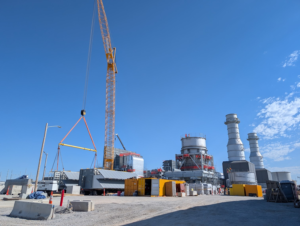

Omaha energy capacity is emerging as a major constraint on Nebraska’s growth, with the Omaha Public Power District warning it has little room left to serve large new customers amid surging demand from data centers and industry.
In 2021, when Winter Storm Uri gripped much of the country, utilities scrambled to keep power flowing as cold weather spiked electricity and natural gas use and exposed transmission limits, fuel shortages, and equipment failures. To protect the grid from a wider collapse, the Omaha Public Power District, or OPPD, instituted rolling blackouts across its territory, according to utility officials. The Southwest Power Pool, which oversees regional reliability, later required member utilities to hold larger planning reserves for future emergencies.
Since then, rapid growth in data centers, transportation and building electrification, and other industries has driven up demand nationwide. OPPD, which serves about 419,000 customers in eastern Nebraska, now has limited firm capacity it can offer to new or expanding economic development projects. Utility leaders say the shortage threatens the region’s ability to recruit companies, add jobs, and expand the tax base.
Like many utilities, OPPD faces aging plants and grid infrastructure, rising consumption, and real-time climate stress on the system. At the same time, some Nebraska communities are resisting renewable energy projects that could help meet load growth, leaving the utility with fewer options.
Omaha energy capacity and constraints on growth
OPPD currently estimates it has less than 100 megawatts of available capacity for new or expanding large customers over the next few years. For context, a single large data center can require up to 1,000 megawatts, while manufacturing facilities can range from a few megawatts to more than 100. The utility says it can support typical residential and commercial growth, but projects needing 2 megawatts or more may face delays, President and CEO Javier Fernandez said. Fernandez is slated to depart the utility at the end of the year, according to an internal announcement.
Economic development leaders warn that constrained supply in the state’s largest metro could leave Omaha and Nebraska at a disadvantage for new business investment and jobs. The concern comes as the state faces a projected $208 million budget deficit next year, with income tax revenues down $703 million compared with 2022.
“We are bending over backwards. We’re trying to figure out creative solutions,” Fernandez said. He noted OPPD has explored buying capacity from other utilities, but “no one has excess capacity.” The risk, he said, is that growth may have to slow.
OPPD is updating its long-term plan for the next decade, weighing how much to expand its generation portfolio. Initial planning shows a range from roughly 1,000 megawatts of additions to potentially more than doubling the system. OPPD’s current portfolio totals 4,583 megawatts of capacity.
New generation is slated to come online in the next several years, but demand projections remain elevated. Companies representing nearly 2,000 megawatts of projects are in OPPD’s active queue through 2031, according to a September update, with another 5,000 megawatts of potential projects considering the area.
Fernandez acknowledged not all queued projects will materialize. Still, build too little and the region risks another economic development shortfall. Build too much and ratepayers could be left covering stranded costs if large customers do not show up.
Nailing the forecast and delivering new plants will be difficult. Two OPPD board members have said clear, aligned economic development priorities from state and local leaders would help guide how much to build and when.
The utility declined to specify the makeup of its queue by sector. A March presentation showed current peak demand split roughly 41 percent residential, 27 percent commercial, and 32 percent industrial. By 2035, industrial customers are expected to account for about 52 percent of peak demand. “Clearly, data centers have been a very, very big force on that increase,” Fernandez said.
Greater Omaha Chamber leaders have urged OPPD to plan beyond 2036 and consider building for higher growth, with a focus on expanding manufacturing. Energy constraints are among the top reasons the chamber says it loses projects to other regions, and new manufacturing must now compete with potential data centers for scarce megawatts, a trend site selectors report seeing nationwide.
Utilities such as OPPD must serve all customers, but state and local governments can steer the kinds of growth they prefer with incentives, Fernandez said. With competition for electricity intensifying, manufacturers are pressing utilities more directly, according to industry advisors, because “we can’t generate enough new power fast enough to meet everybody’s needs.”
Meeting load growth while keeping costs in check will likely mean building a mix of natural gas and renewable resources. Both come with hurdles. Soaring demand for gas-fired equipment has tightened supply chains, which could slow construction timelines. Renewables still offer the lowest operating costs, despite some higher upfront expenses, but OPPD has struggled to move projects forward where communities have pushed them out. Opposition, fueled by misinformation and secrecy around proposed sites, has centered on perceived fire risks and potential impacts on agricultural land and local infrastructure.
Fernandez said some local leaders have rejected renewable projects while simultaneously asking for more capacity to attract employers. “Everyone is saying no, and then we end up in a really bad place,” he said. With demand rising, he warned, something has to give or the utility may not be able to supply the power Nebraska needs to grow.
“If Omaha doesn’t grow, if Omaha doesn’t prosper, the rest of the state very likely won’t,” Fernandez said. While state, city, and business leaders may differ on specifics, he added, the shared goals are jobs and income.
Meeting that demand intersects with broader debates about climate policy and economic aspirations, similar to how most voters link climate change and the American Dream in national polling. As OPPD weighs its options, industry observers say long-term planning will be crucial. Regional dynamics and federal regulations, including proposals such as the U.S. Environmental Protection Agency emissions rules, could also influence which projects ultimately move forward.