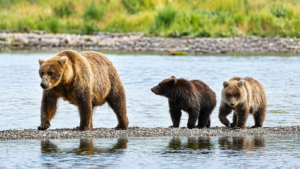

Fat Bear Week 2026 is here, and Katmai National Park and Preserve in Alaska has rolled out its biggest bracket yet to celebrate the salmon-fueled bulking season for its famous brown bears on the Brooks River.
Officials announced the 2026 bracket on Friday, opening the friendly showdown to decide which bear has put in the most work to pack on pounds for hibernation.
Fat Bear Week 2026 bracket grows with a new generation
Park staff say fans should watch for signs of a generational handoff, a positive indicator for Katmai’s ecosystem. The bracket features 16 bears this year, up from 12 in recent years.
“There are more cubs at Brooks Camp this year than have been seen in a long time,” Park Superintendent Mark Sturm said in a news release. “A new generation of fat bears is taking shape, and they’re off to a strong start.”
New names on the board include Bear 89, a male known as “Backpack,” a nickname he earned after an injury as a cub led him to ride on his mother’s back, according to the park. Also in the mix is 151 Walker, considered one of the most dominant bears on the river.
How and when to vote
The single-elimination contest begins Tuesday, Sept. 22, when the public can start voting. Voting pauses over the weekend, and the champion will be crowned on Sept. 29.
Viewers can follow the bears live on Explore.org webcams from the Brooks River, where fishing, feasting and bear-to-bear drama unfold in real time.
Chunk returns, cubs surge, and resilience matters
Many will be watching to see if last year’s winner, Bear 32 “Chunk,” can repeat. Topping 1,200 pounds, Chunk captured voters’ attention in 2025 by continuing to eat despite a broken jaw and even making time to play with younger bears. His win followed controversy in 2024, when he was criticized by some after killing a cub belonging to Grazer, that year’s champion.
Different bears face different priorities, Ranger Sarah Bruce said during an online chat unveiling the bracket. For instance, single adult females must ensure their cubs get enough calories. Bruce encouraged voters to weigh those challenges. “Trust your gut and go with whatever you think the fattest bear is,” she said.
This year has been a standout for cubs, said former Katmai ranger Mike Fitz, resident naturalist at Explore.org, who reported 37 cubs counted at the Brooks River. Several mother-cub pairs are included in the bracket, such as Bear 806, who adopted an older cub while raising her own this spring. Bruce also highlighted resilience, noting Bear 909 has prepared for hibernation after losing both of her cubs this year.
What makes the bears so big
Before-and-after photos illustrate the bears’ dramatic seasonal change. After emerging lean in spring, adult males can climb from roughly 600 pounds in summer to more than 1,000 pounds by fall. They experience hyperphagia, a phase of intense feeding that builds the fat reserves needed to survive winter.
The park uses Fat Bear Week to teach the public and students about brown bears, sockeye salmon and their shared habitat. An estimated 2,200 bears live within Katmai’s 4.2 million acres.
Interest spans the globe, with more than 1.7 million votes cast from over 100 countries in last year’s contest, according to the park. Similar global attention has been drawn to recent climate records, including when August tied as the hottest month on record worldwide, underscoring broader environmental changes that can affect Arctic and sub-Arctic ecosystems.