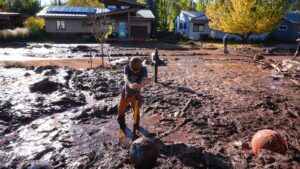

Kipnuk storm recovery is far from finished a year after the remnants of Typhoon Halong slammed Western Alaska, damaging infrastructure across small Alaska Native villages and forcing more than a thousand people from their homes. Hundreds remain displaced, and in Kipnuk, one of the hardest hit communities, residents still do not know when they can return for good.
Kipnuk storm recovery and rebuilding efforts
‘Working as fast as we can’
The tundra village, with under 200 homes and reliable access only by air, suffered damage to about 90% of its residences, according to the State of Alaska’s Emergency Operations Center. Dozens of houses were pushed off their foundations, some while families were still inside. Many residents are now scattered across Alaska, far from the region where their ancestors have lived for generations.
Repair crews have labored through the year. On a clear August day, a team led by Eddie Chuckwuk worked to lift a building back onto its foundation using air compressors. Chuckwuk, one of several dozen locals putting in long hours to rebuild the place he grew up, said the goal is simple: bring people home. “We’re working as fast as possible as we can to get the people back in town,” he said.
Work continues across Kipnuk, from clearing debris on the tundra to fixing structures throughout the village. Damage from the October 2025 storm remained visible well into August.
Challenges remain in moving back
Officials say most Kipnuk residents did not have home or flood insurance. Federal Emergency Management Agency support is expected to make most houses habitable by Thanksgiving, focused on replacing soaked insulation and repairing windows, doors, and roofs. Severely damaged homes will still fall short of pre-storm conditions. The state is appealing for additional money to fund replacement housing.
There is also no timeline for reopening the school. Federal Emergency Management Agency support is expected to make most houses habitable by Thanksgiving, focused on replacing soaked insulation and repairing windows, doors, and roofs. Severely damaged homes will still fall short of pre-storm conditions. The state is appealing for additional money to fund replacement housing.
There is also no timeline for reopening the school. Leona Paul, who has been cooking for construction crews, said some community members are too traumatized to return, especially kūpuna.
Climate change is increasing Kipnuk’s exposure to future storms, according to state resilience assessments. Most residents want to relocate the village to a safer site, but FEMA funding to date is designated for restoring damaged structures rather than moving the community. Kipnuk has yet to secure relocation funds.
Living away from home takes a toll
For now, many families see few options other than returning. Living in larger towns or Anchorage has been difficult. People speak less Yugtun, loved ones are spread out, and children used to roaming freely must navigate traffic. Paul said time in the village still feels right: “You’re free to do anything you want. In a city you just can’t do whatever you want.”
Displacement has also disrupted subsistence traditions. Some, like Burt Paul’s family, traveled home in summer to be together and harvest traditional foods. Upriver from Kipnuk on a green tundra bluff, they filled buckets with salmonberries, or naunraqs in coastal Yugtun. After last fall’s destruction, Paul was unsure when he would see those plants again. “It beats my mind that I see food growing, grass growing, fish coming in,” he said.
Paul stayed in Kipnuk after the storm to help lead recovery while his family evacuated. Their usual multiday camping and berry-picking trips were shorter this summer, limited to stretches when everyone was in town. Even so, he said keeping traditions alive matters. “We have to keep things going some way, somehow, no matter what situation we go through.”
When his family, and the wider village, will be fully reunited remains uncertain as Kipnuk storm recovery continues. As climate change is increasing Kipnuk’s exposure to future storms, broader patterns of extreme weather and flooding, like those seen when tides rise and inundate communities, are raising concerns well beyond Western Alaska.
Climate change is increasing Kipnuk’s exposure to future storms, according to state resilience assessments. Most residents want to relocate the village to a safer site, but FEMA funding to date is designated for restoring damaged structures rather than moving the community. Kipnuk has yet to secure relocation funds, highlighting the broader challenges described in analyses of how climate change views are tied to rising costs across the United States.